
Poets in Hell
In hell we face our fiercest love

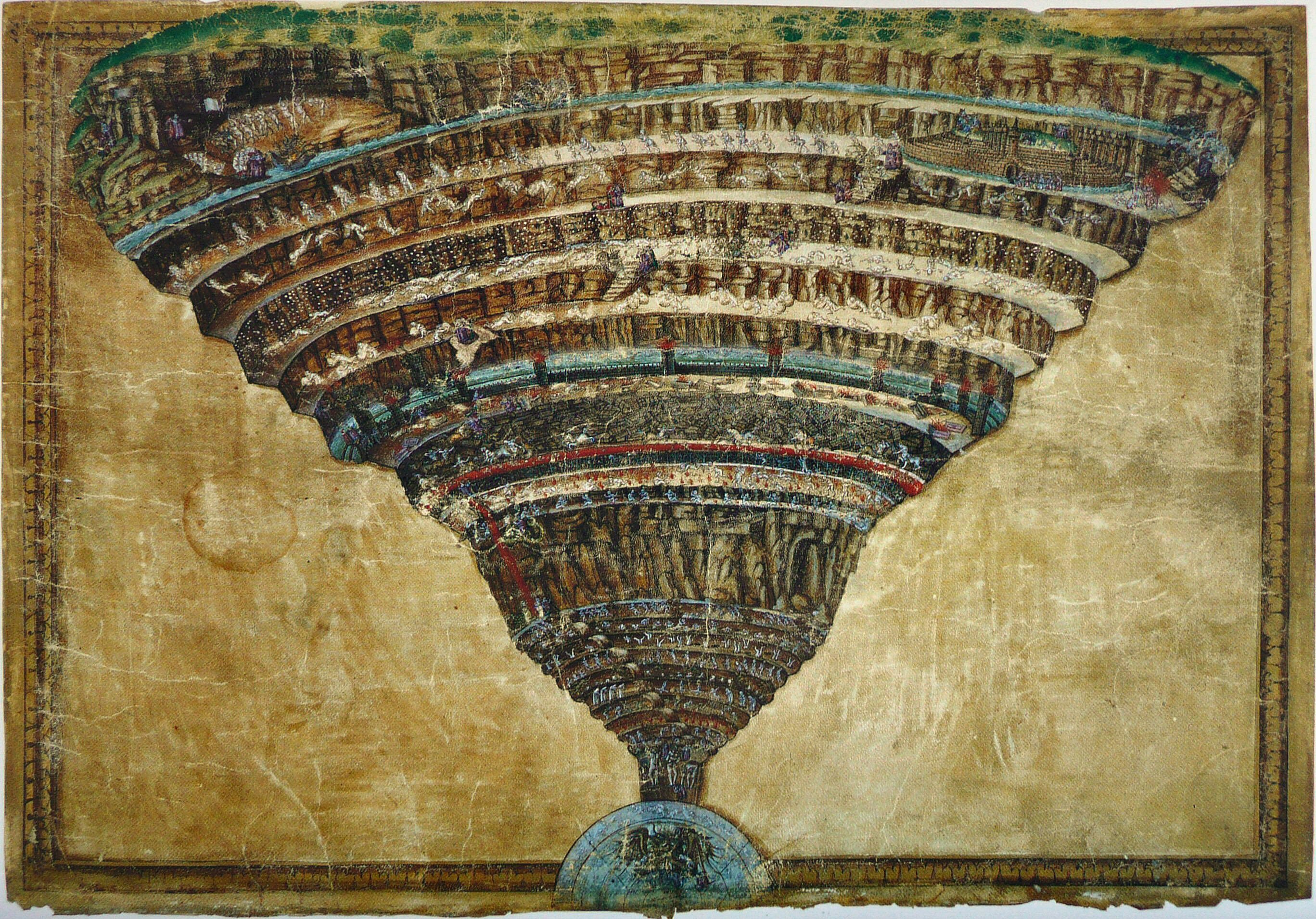
Hello from hell, in poetry!
The living don’t usually choose to go to hell. Most of us do not want to suffer and would much prefer paradise. Even when suffering is inevitable, we reassure ourselves that it will at least not be eternal. However, love is something we seek as essential to life, and we know it will also lead to suffering. The risks we take for love, in all its guises, are ways of bargaining with hell, accepting a little fire and brimstone. Love and Death are poetry’s favorite subjects— in poems, HELL becomes a generative force to explore, escape, embrace, and transform ourselves at moments of emotional upheaval and conflicts of the heart. In hell, we must face our capacity to love.
In “Proverbs of Hell” from William Blake’s “Marriage of Heaven and Hell,” hell represents creative energy and passion whereas heaven represents repression or deadness: you never know what is enough unless you know what is more than enough.
Milton famously writes in Paradise Lost: The mind is its own place, and in itself can make a Heav’n of Hell, a Hell of Heav’n. Through Satan, Milton reveals the plight and power of human subjectivity.
In “A Season in Hell” by Arthur Rimbaud, Hell is neither a physical place nor a psychological state, but a muse of sorts: Ah! I’ve been through too much:-But, sweet Satan, I beg of you, a less blazing eye!…let me rip out these few ghastly pages from my notebook of the damned. The poet pleads for less intensity. The sacrifice, an act of self-destruction or the longing to be read?
Hell poems often blur a love quest with self-elegy. Ruminating about the future or the past might be said (by a therapist or life coach) to take us out of the present, but in a poem, the practices of elegy and fantasy make us feel all the more alive. So why Hell? Down below, I will swipe through several hell poems with you, considering Hell or the underworld as an opportunity for poets to journey through their own mind-places where loss and longing come together to better understand our interest in love (rather than just the love interest). Another of Blake’s proverbs from Hell: The most sublime act is to set another before you.
The protagonists of Hell poems forge attachments they burn for or are forced into, often learning to voice and sometimes satisfy their own desires. Milton’s Satan says: Better to reign in Hell, than serve in Heaven. The most human figure in the epic, Satan wants to be in control more than he wants to be good. If Hades or the Devil or Satan reign over hell, in a poem it is the poet-speaker who governs. The poet takes back hell.
The voices of many hell poems respond to both a change of worlds and the uncertain fate of relationships. What we consider solitary about death, in hell becomes relational. As outrageous as it might sound, by letting go of what we love or the assumption that we are loved, hell poetry sometimes allows us to linger on why we love and why we want to be loved in the first place.
If Death poetry can give us life without life in the way, hell poetry can show us the value of Love and Desire without the limits of any particular love or desire. These are just a few things a hell poem can do.
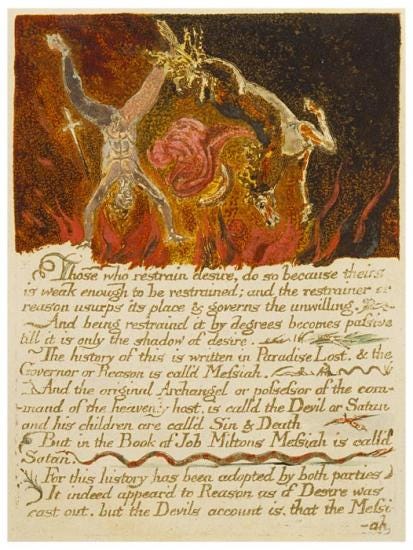
To test if your love is genuinely unselfish, Kierkegaard says: “Go out, then, to the dead; visit him in his stillness, not out of passion... for the dead demands nothing, he gives nothing, he costs nothing, he rewards nothing.”
For anyone who has felt thrilled and threatened in love, let us go to hell in the following poems and find our own capacity for love eternal and on fire!
In his poem “Hell,” Franz Wright suggests that it is not what our minds make, but the psychological suffering we can’t choose that eventually makes us holy (the highest form of lovable?).
But if they were condemned to suffer
this unending torment, sooner or later
wouldn’t they become the holy?
Sometimes at stormy moments, our world seems to become hell itself as in Shakespeare’s The Tempest: Hell is empty and all the devils are here.
Emily Dickinson, irreverent as she was, used the biblical language of heaven and hell to understand the experience of losing loved ones:
Parting is all we know of heaven,
And all we need of hell.
When Odysseus goes to the underworld in Book XI, the ghost of Achilles ushers Odysseus back to life (and eventually home):
No winning words about death to me, shining Odysseus! By god, I’d rather slave on earth for another man—some dirt-poor tenant farmer who scrapes to keep alive—than rule down here over all the breathless dead
Unlike Satan who prefers power in hell than submission in heaven, Achilles reminds Odysseus that any kind of human relationship is better than being alone among the dead.
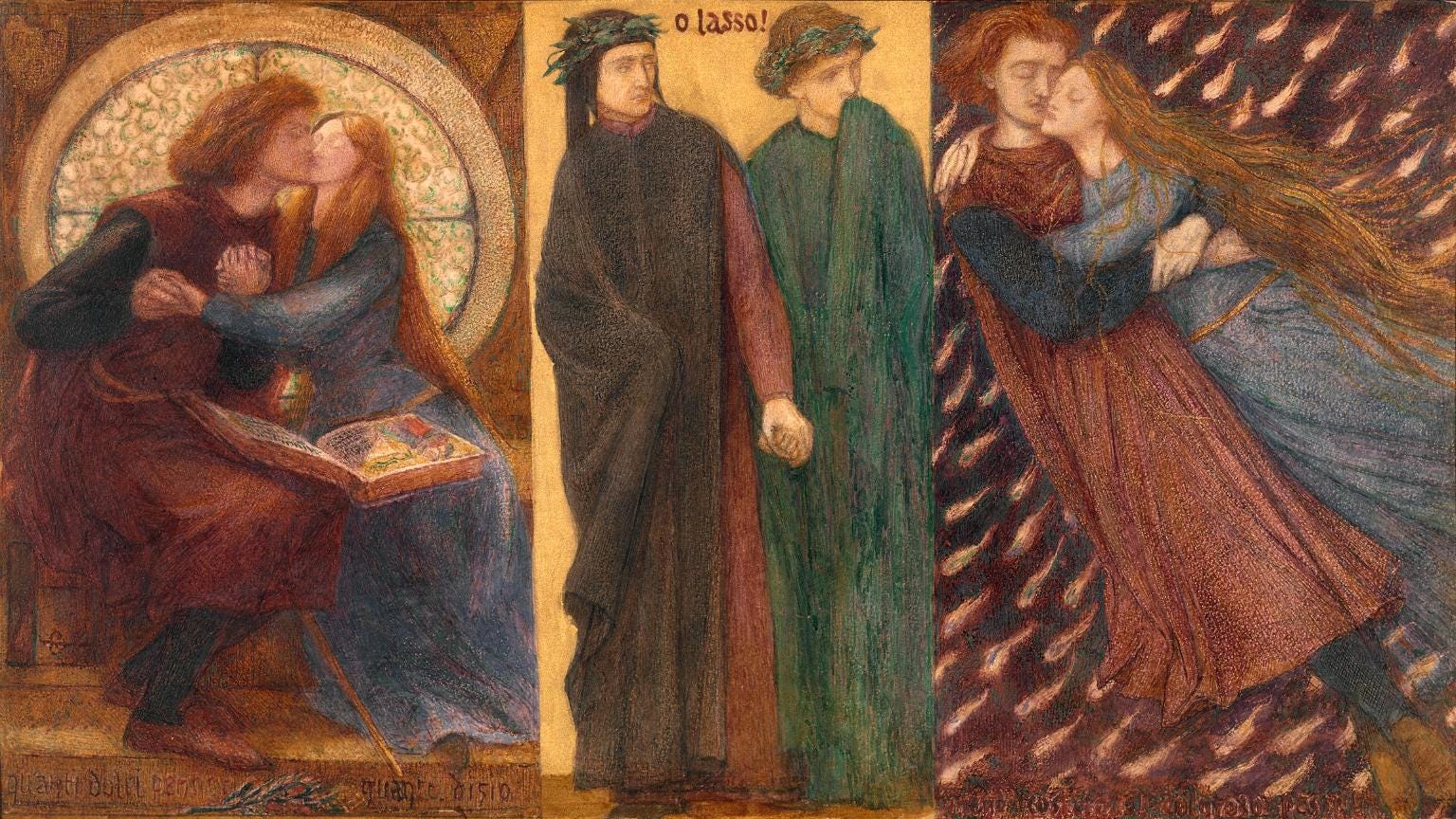
Every once in a while, human lovers do end up in hell together. One of my favorite parts of Dante’s “Inferno” is Canto V in which we meet the lovers Paulo and Francesca (who was killed by her husband for adultery). They could not resist each other as they read a love story together, so they end up kissing and being caught with the book of love between them.
Francesca explains to Dante: love led us both into one death.
amor condusse noi a una morte
Note the word amor enclosed yet broken in “una morte” or “one death.” Like Romeo and Juliet, the force that brings the lovers together is also what kills them. The death of a relationship may feel like dying, but the the feeling behind that death is love.
Sappho writes “I simply want to be dead/ weeping she left me.” We might even say love and death consummate each other.
It is typical for women in hell to be unloved, separated from love, violated instead of loved, or maidens who have never made human love, pining eternally for their almost-good mortals. Whatever the case, they are damned to become brides of hell. Let’s travel deeper into the Classical and Mythological underworld:
In “A Myth of Devotion” from Louise Gluck’s Persephone sequence in Averno, Hades has the best of intentions (I will write notes between the stanzas in parenthetical).
When Hades decided he loved this girl
he built for her a duplicate of earth,
everything the same, down to the meadow,
but with a bed added.
…
A replica of earth
except there was love here.
Doesn’t everyone want love?
(Hades loves Persephone, but he doesn’t understand how to be a good lover to her.)
Doesn’t everyone want to feel in the night
the beloved body, compass, polestar,
to hear the quiet breathing that says
I am alive, that means also
you are alive, because you hear me,
you are here with me. And when one turns,
the other turns—
Guilt? Terror? The fear of love?
These things he couldn’t imagine;
no lover ever imagines them.
(Though she is mortal, not to mention dead, Hades expects her to desire and feel pleasure as if she were alive.)
…He takes her in his arms.
He wants to say I love you, nothing can hurt you
but he thinks
this is a lie, so he says in the end
you’re dead, nothing can hurt you
which seems to him
a more promising beginning, more true.
(Persephone does not feel loved. She feels nothing. At least he acknowledges this in the end.)
Is hell a figure, a place, or the cyclical journey from earth to hell and back? Some might call that seasonal cycle Life. We go on even as we move between love (in the real world) and suffering (the underworld of that love).
What is the opposite of eternal damnation? Maybe not eternal salvation as heaven promises. Maybe anti-hell is the briefest moment of satisfaction in the never-ending journey between love and longing? Maybe the opposite of hell is a poem.
In Rita Dove’s “Hades’ Pitch” which also takes on the persona of Persephone, she writes:
If I could just touch your ankle, he whispers, there
on the inside, above the bone—leans closer,
breath of lime and pepper—I know I could
make love to you.  She considers
this, secretly thrilled, though she wasn’t quite
sure what he meant.  He was good
with words, words that went straight to the liver.
Hell seduces. Often in poems, hell (or its representative, the devil) is eloquent. Maybe because he is not human and so can speak in ways we cannot. The Persephone persona is tempted. Hell thrills us with intimacy, even when it unsettles us and we don’t quite know what it means. Have you ever experienced this with a poem?
Like Persephone, Eurydice is a mythological woman in hell. Though Orpheus, her living lover, attempts to save her by going to Hades himself and leading her back to life with his song (poetry), he ultimately fails her. In a sense it is his love that keeps her dead even as it aims to save her. It is his love that commits her to marrying Hell. Demeter also tries to retrieve her daughter Persephone but must settle for a compromise of seasons.
Our living relationships, our beloveds, sometimes have to let us go, at least for a time, to keep us alive and in love with them. Sometimes we fall in love with hell (or fall into hell with love?) in the process of coming back to life.
Here is H.D. speaking in the voice of Eurydice:
hell is no worse than your earth
above the earth,
hell is no worse,
no, nor your flowers
nor your veins of light
nor your presence,
a loss;
my hell is no worse than yours
though you pass among the flowers and speak
with the spirits above earth.
The long poem ends:
At least I have the flowers of myself,
and my thoughts, no god
can take that;
I have the fervour of myself for a presence
and my own spirit for light;
and my spirit with its loss
knows this;
though small against the black,
small against the formless rocks,
hell must break before I am lost;
before I am lost,
hell must open like a red rose
for the dead to pass.
The poets we call “confessional” often write of similar states of loneliness and being lost, the life/death drama of our own most hellish thoughts and feelings.
In “Skunk Hour” by Robert Lowell, the lonely speaker seeks love in the cars of others. Here is how he describes that state of being alone in the presence of others’ relationships:
A car radio bleats,
‘Love, O careless Love . . . .’ I hear
my ill-spirit sob in each blood cell,
as if my hand were at its throat . . . .
I myself am hell;
nobody’s here—

only skunks, that search
in the moonlight for a bite to eat.
What does it tell us that this poem is dedicated to a friend he loved, the poet with whom he sustained the longest living relationship?
Anne Sexton imagines hell in “In the Deep Museum”":
My God, my God, what queer corner am I in?
Didn't I die, blood running down the post,
lungs gagging for air, die there for the sin
of anyone, my sour mouth giving up the ghost?
Surely my body is done? Surely I died?
And yet, I know, I'm here. What place is this?
Cold and queer, I sting with life. I lied.
Yes, I lied. Or else in some damned cowardice
my body would not give me up. I touch
fine cloth with my hand and my cheeks are cold.
If this is hell, then hell could not be much,
neither as special or as ugly as I was told.
This border of death, possible hell, is for the speaker a disappointing and disorienting state. In the litany of questions, we see the speaker waking up to herself outside herself.
In Sylvia Plath’s “Lady Lazarus,” also spoken from a posthumous perspective, the speaker’s suffering is a form of achievement":
Dying
Is an art, like everything else.
I do it exceptionally well.
I do it so it feels like hell.
I do it so it feels real.
I guess you could say I’ve a call.
Hell as a feeling is a familiar idiom, and as Plath describes dying as a creative act, the slant rhymes (well, hell, real, call) lead us to a disturbing near-satisfaction.
From myth to modernity and beyond, hell is a great place to keep women. In “Bound for Hell” Marina Tsvetaeva makes hell a gendered destination for the most lovely “sisters” who do not spend their nights “spinning” or “above a cradle” but instead dance and enjoy a free-spirited life:
Lost in nights of starlight, in the garden.
Where apple trees from paradise are found.
No, be assured, my gentle girls, my ardent
And lovely sisters, hell is where we’re bound.
Tsvetaeva plays on the idea of being “bound” as the only end of a woman’s journey. And yet she is the poet, a woman, binding the lines ABAB.
Have you ever felt bound to a place? Sometimes the real world resembles the underworld. Sometimes real places conjure the illusion of hell.
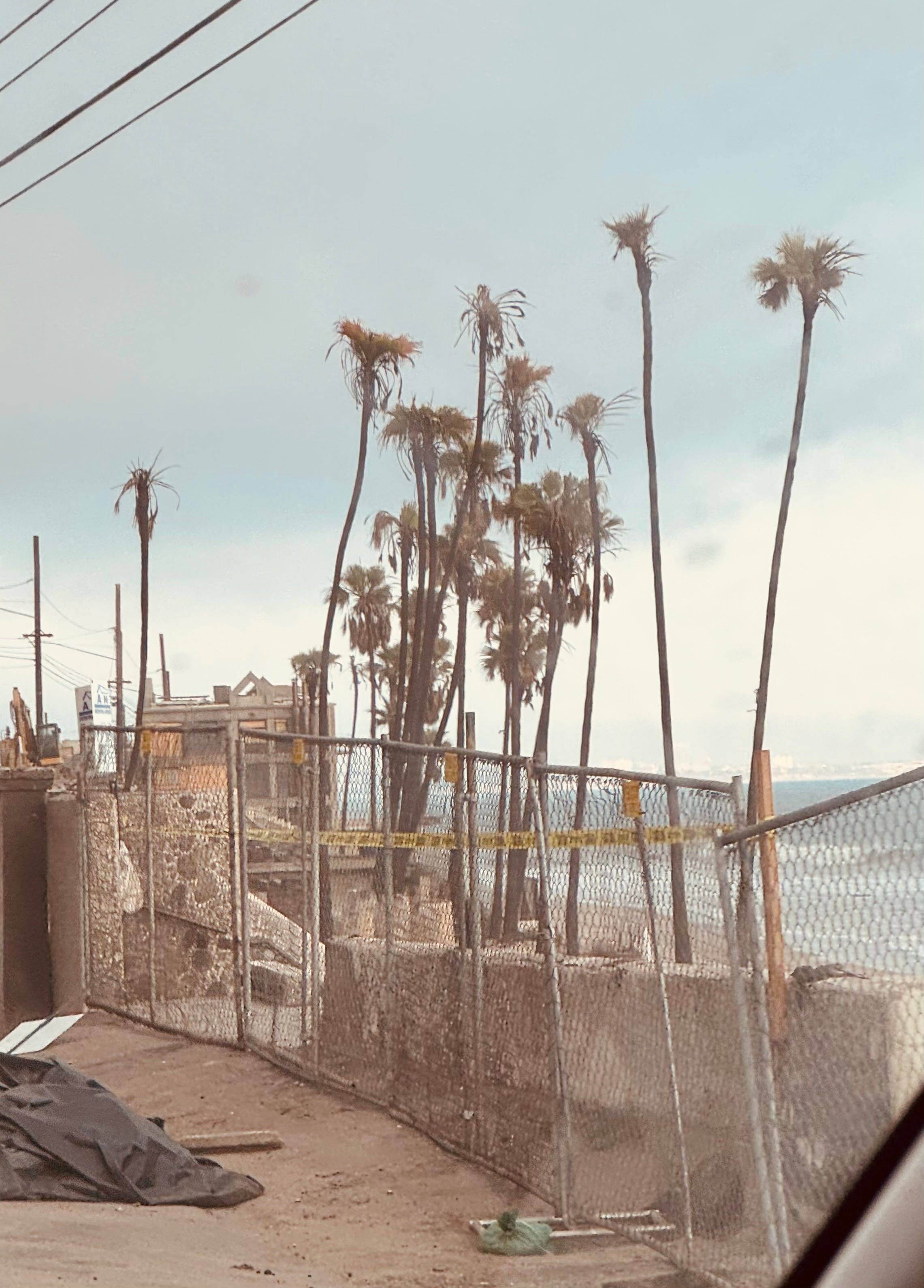
In “Poet in New York” Gabriel Garcia Lorca writes:
This is not hell, this is the street.
That is not death. That is the fruit stand.
The speaker has to remind himself that he is not in hell, that he is alive. And in fact, Lorca wrote some of his greatest work in and about the city he likens to hell.
What New York is for Lorca, Los Angeles is for me. The earth cracks open, the hills burst into flame. But then I tell myself: This is the freeway. That is the taco truck. So so much I love lives here. I guess I can’t help but love hell for now, make it mine.
You might say, wait, these are all poems in hell, not poets. But just think of the psychological burning ( passion and torment) that compelled so many of these poets to write. It is the human struggle, in fact, to have feelings and not quite be able to share them—even the love we feel for another. Poets offer us the words. The poem may take us back to hell, but the poet takes back hell, give it form and beauty and truth.
"We must prefer real hell to an imaginary paradise," says Simone Weil in Gravity & Grace. I’ve been thinking about how often I say “I won’t” when I mean “I want.” Fearing that love is an illusion, sometimes we spend a season in hell where it feels safer to say I will not than will you?
Think about your own hell. Could you reclaim it in poetry without pretending it is a paradise? Could your hell marry your heaven? Let me know what hell becomes for you in the comments!
To read poems from my own pretend paradise, you can preorder The Going Is Forever here.
Thanks for reading! Happy summer in hell!
Thank you for this sermon on duality, my most favorite category of obsessions! So much to ponder and relate to. The H.D. poem reads like an ars poetica to me. If you love dwelling in the hell of inevitability, as I do, with Orpheus and Eurydice, I recommend "Orpheus: The Song of Life" by Ann Wroe.
Serpents Sometimes Writhe
I have seen them gentle,
Tame, and meek,
That now are wild…(Wyatt)
Don’t kid yourself.
Usually they’re stealthy, still -
They slither silently
Through tall grass,
Stop, stare, flicker
Their tongues
And maybe offer you an apple.
But serpents sometimes writhe.
All hell breaks loose -
They thrash and coil,
Whip about madly,
Wreak havoc,
Bite at you with their fangs
And unless you find
Some tourniquet, quick,
You’re either dead,
Or in love.