
Poets Visiting
"Soul, Take Thy Risk"

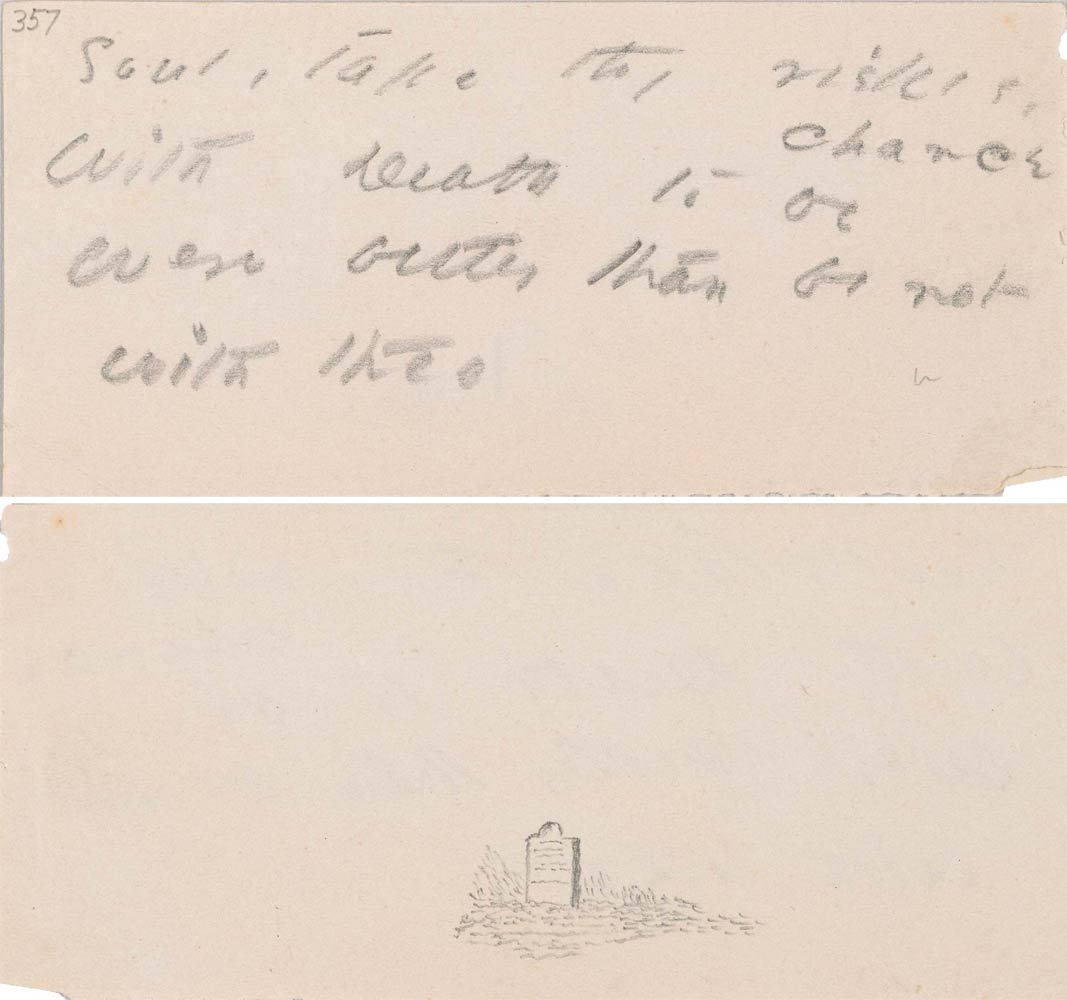
Soul, take thy risk.
With Death to be
Were better than be not
With thee
Earlier this summer, as I moved a decade of my life back to New York from Los Angeles, my children, my books, my mother-self meeting my childhood, I learned that Fanny Howe had died. I didn’t know Fanny Howe or her work except for her stunning essay “Doubt” which has a favorite line “Doubt is what allows a single gesture to have a heart.” I was far from my children but near Howe geographically, in Cambridge, when I heard the news, and somehow within hours I knew I had to read her whole oeuvre. I began with two collections from The Grolier, then found another local Berkshires bookstore in Lenox called The Bookstore and bought her selected, but by a strange fluke when I looked inside, the book cover to cover was translated prose by Juan Rulfo, whose book Pedro Paramo is a favorite novella about the land of the dead.
It was as if her crossing from one side to the other was essential to whatever transition was in store for me on earth. Soon Fanny Howe was everywhere—on the way to visit a shrine and to hear the most incredible piano I’ve ever heard at Tanglewood (more later), there was a library sale at which any book with a gold star sticker was a dollar! Dangerous. One was Ilya Kaminsky’s anthology A God in the House: Poets Talk about Faith. The librarian saw I was wearing a hat that read Books (from Books are Magic) and asked if I was a librarian. I said no, I am a reader. In retrospect, I wish I had just said, No I am a book.
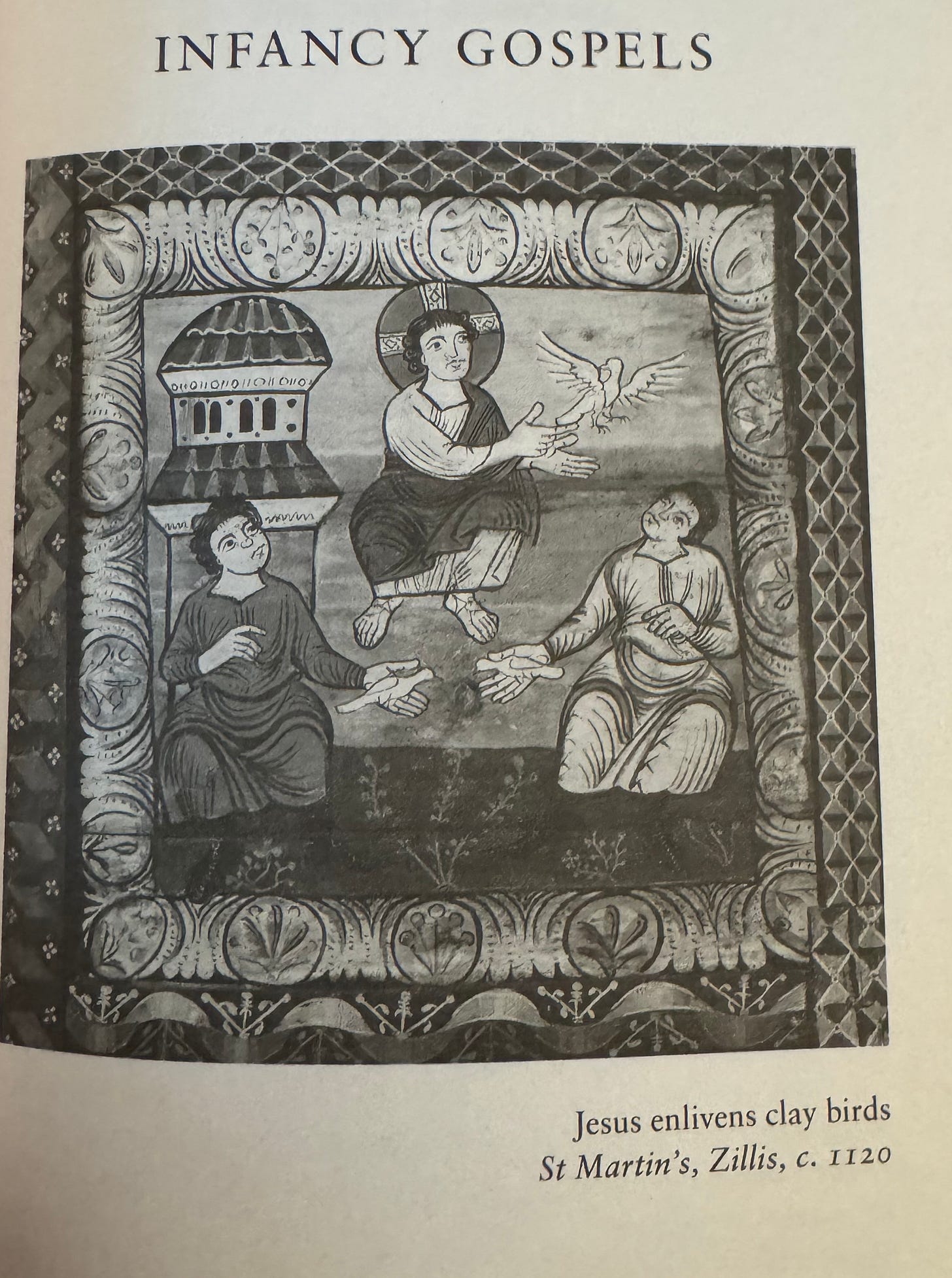
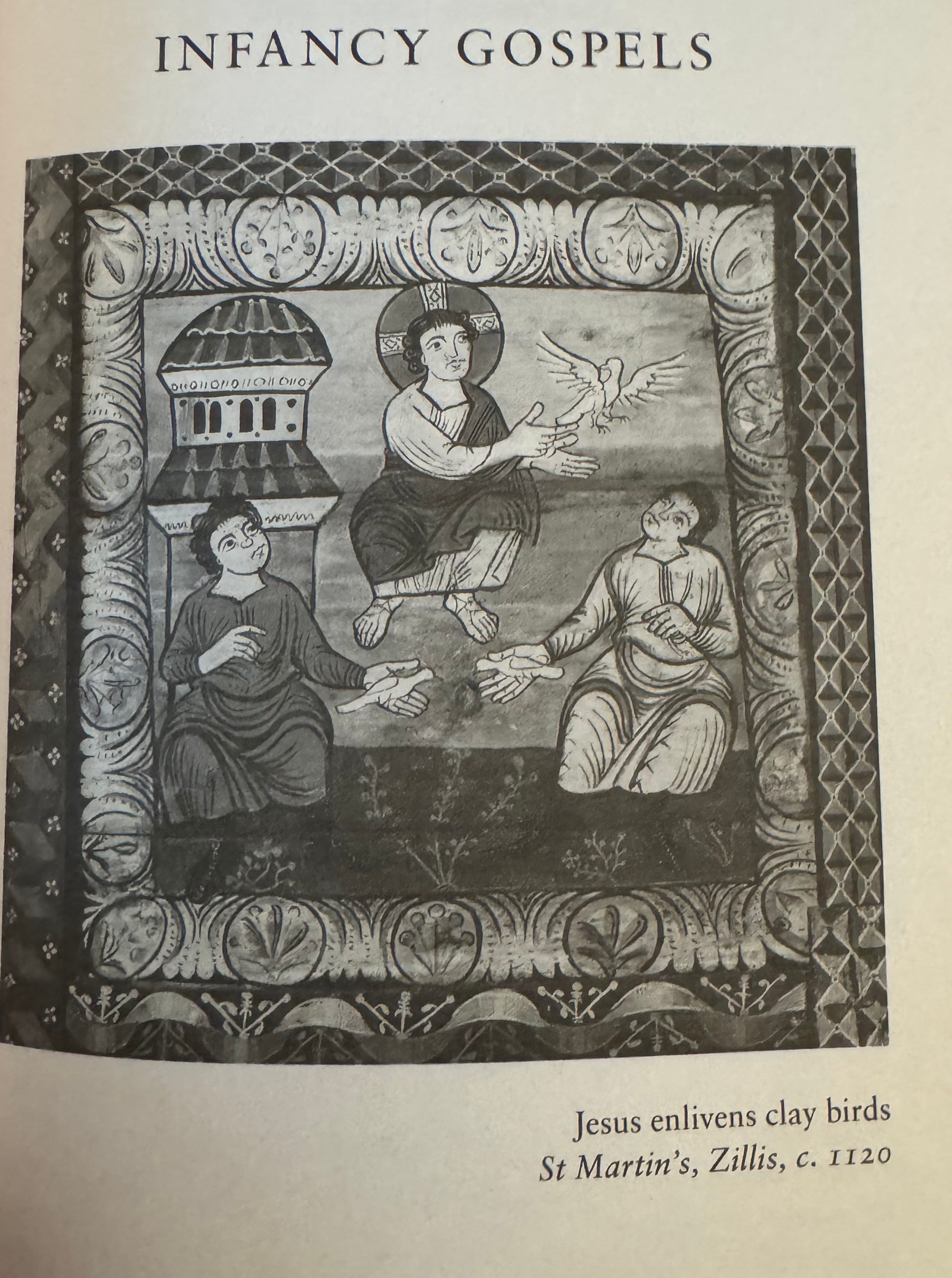
This anthology, which I believe opens or at least includes Fanny Howe, led me down a rabbit hole from Simone Weil’s Waiting for God to Tears and Saints by Cioran, along with the Apocrypha (The Birth of Mary, Anne’s conception of her, and the infancy of Jesus, and his rebellions at school, spoke to my own labor and experience of parenting) I’m now exploring a bit of Avivah Gottleib Zornberg’s Genesis: The Beginning of Desire, recommended to me by the wonderful spiritual poet emet ezell, who I got to meet in Berlin of all places—and we even went to Migas listening bar and heard the most mystical folkloric Polish album KSIEZYC (Moon) which I’d recommend playing right now! I didn’t have paper but I had a Helmut Newton photo of Andy Warhol postcard that I used to free-write as I listened and had a glass of skin contact. Blissful really.
So….Jesus gets expelled from schools, I return from LA. That is the theme of the summer issue of poets living: imaginative exiles, expulsions, visitations, doubt-fruits, and the world of the spirit. I guess this is always life’s theme. Here is my latest season in hell, summering with the dead, delighting in demons!
Here’s a piece I wrote about discovering Fanny Howe in Massachusetts.
Want to be haunted? The incredible pianist I heard at Tanglewood, Seong-Jin Cho, played Ravel’s Concerto for the Left Hand. He lives in Berlin, coincidentally, and I kept trying to spot him on the U-bahn. He was magnificent. That feeling when you’re in the presence of genius, which I guess I’ve mostly ever felt at a reading or via language somehow, never at a concert en plein air! He treated the piano like it was a martian or an internal pain or burning hot, a feeling he’d never felt before. Now I want to read an article I came across about about Nicholas McCarthy, Only 5 Fingers Playing Piano, but the Sound of So Many Hands.. The headline captures something I felt hearing Ravel’s Concerto for the Left Hand, written specially for Paul Wittgenstein, brother of the philosopher Ludwig Wittgenstein.
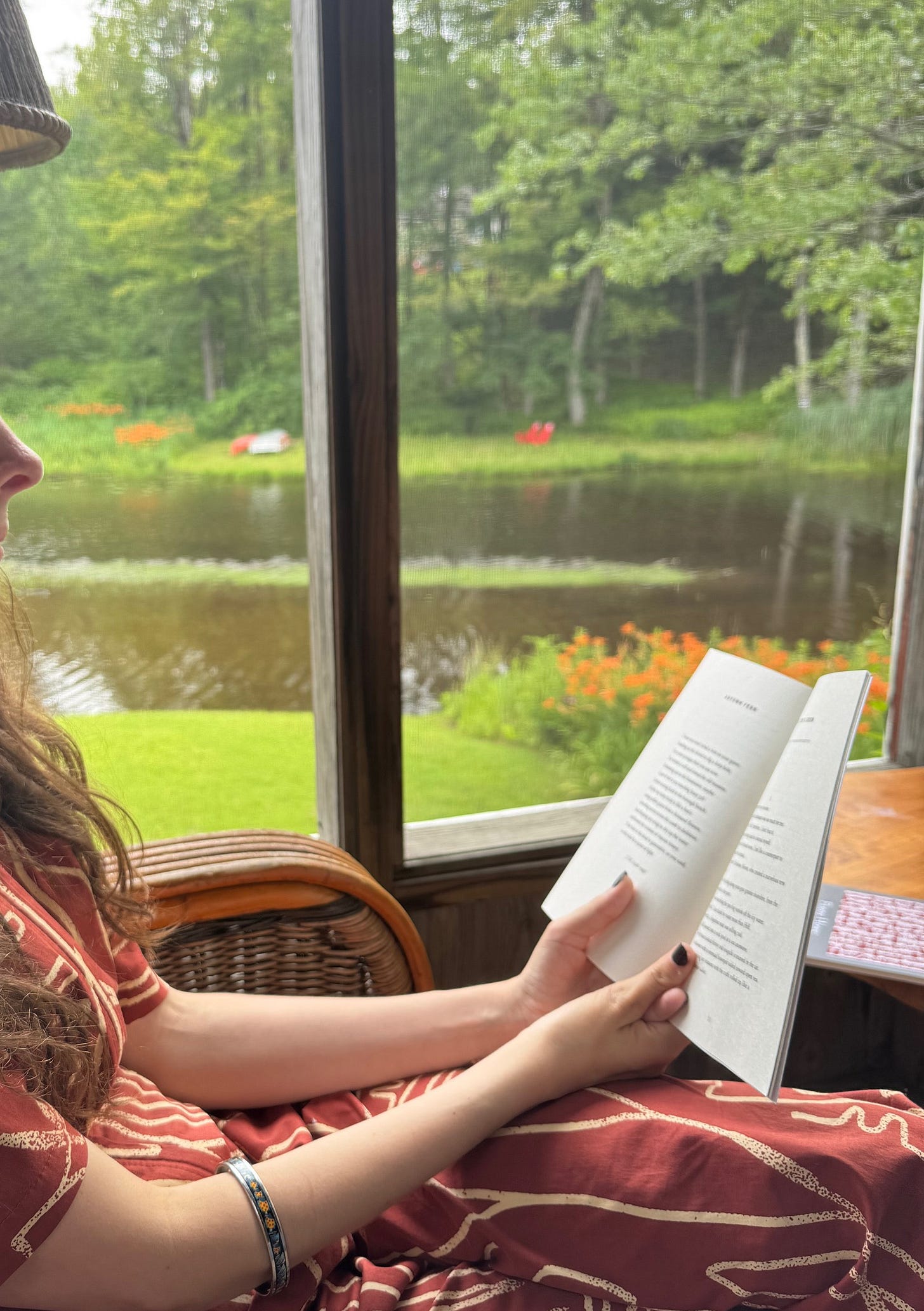
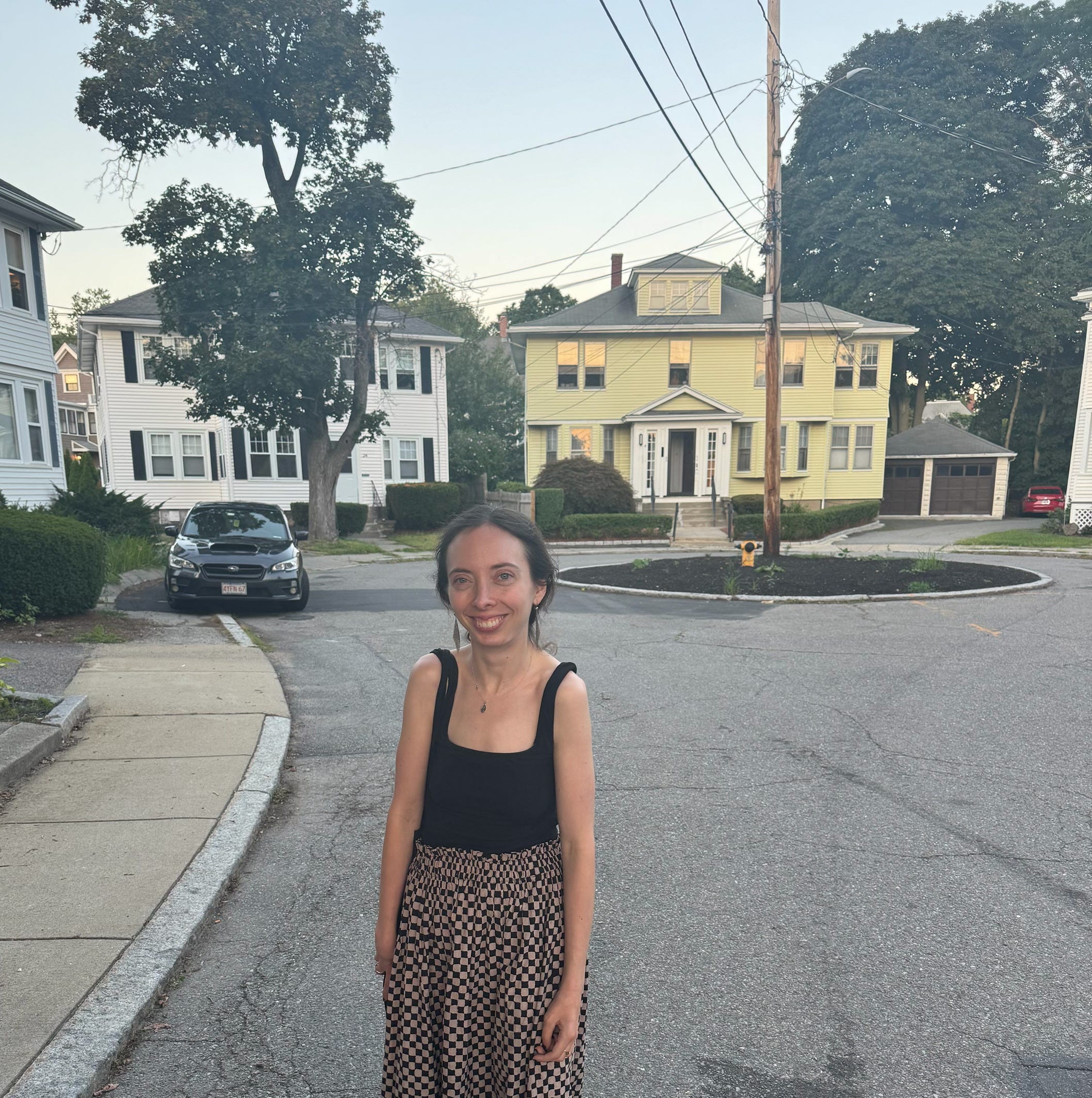
I stopped by Franz Wright’s home in Waltham, on a lovely a roundabout as the moon came out, and highly recommend a listen to Two Years with Franz. He recorded tapes of his daily life, mad spirals, rants at his cat, composing poems, loving remarks, jokes with his wife Beth etc. It felt like he was still at home and quickly left lest he, as much as the new tenant, shout Leave! Maybe that should be a poem, the imagined “Leave” of a ghost still terretorial of his earth-home.
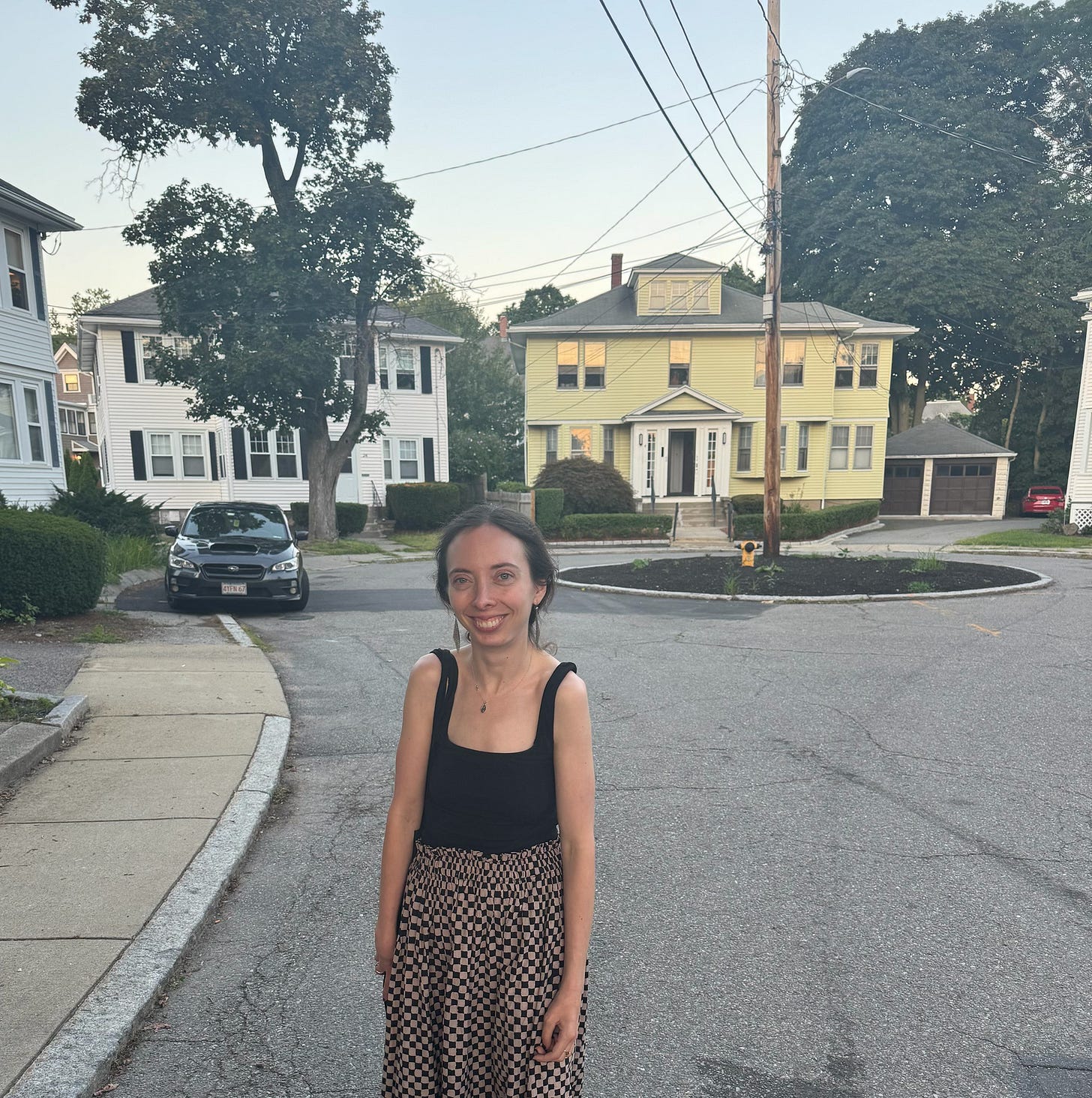
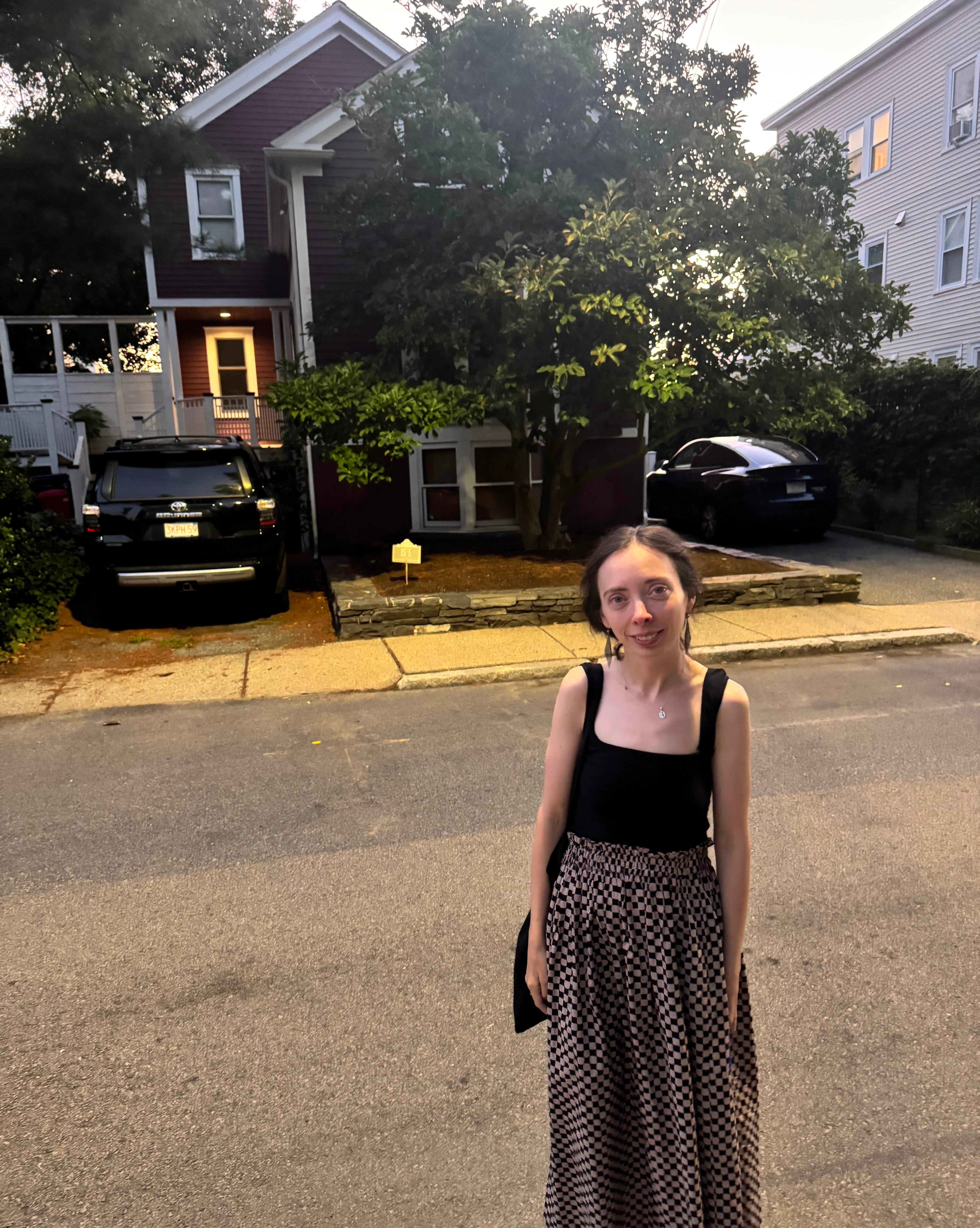
On my mentor (soul-sister) Lucie Brock-Broido’s birthday I went to Mt. Auburn (see previous Substack newsletter) and this August I went to Sargent Street to see her castle, as dusk fell over Cambridge. It was raining the day I went to her grave and I didn’t cry. This time, no rain, but I could not stop weeping. Maybe it is because the house is where she lived and wrote all her poems, because she is not there in body, whereas her body is where the grave is, yet there is no sense of her life itself there. I don’t know
My mentor Jean Valentine’s daughter published this wonderful piece about her mother in Lit Hub. It’s heartbreaking, honest, beautiful. I have been thinking about my own failures as a parent and as a child, and the grace of poetry, too, so this timing was welcome. Here is an essay I wrote about Jean, too. What a mystery mothering is, and how much more complex and capacious than the way we often expect.
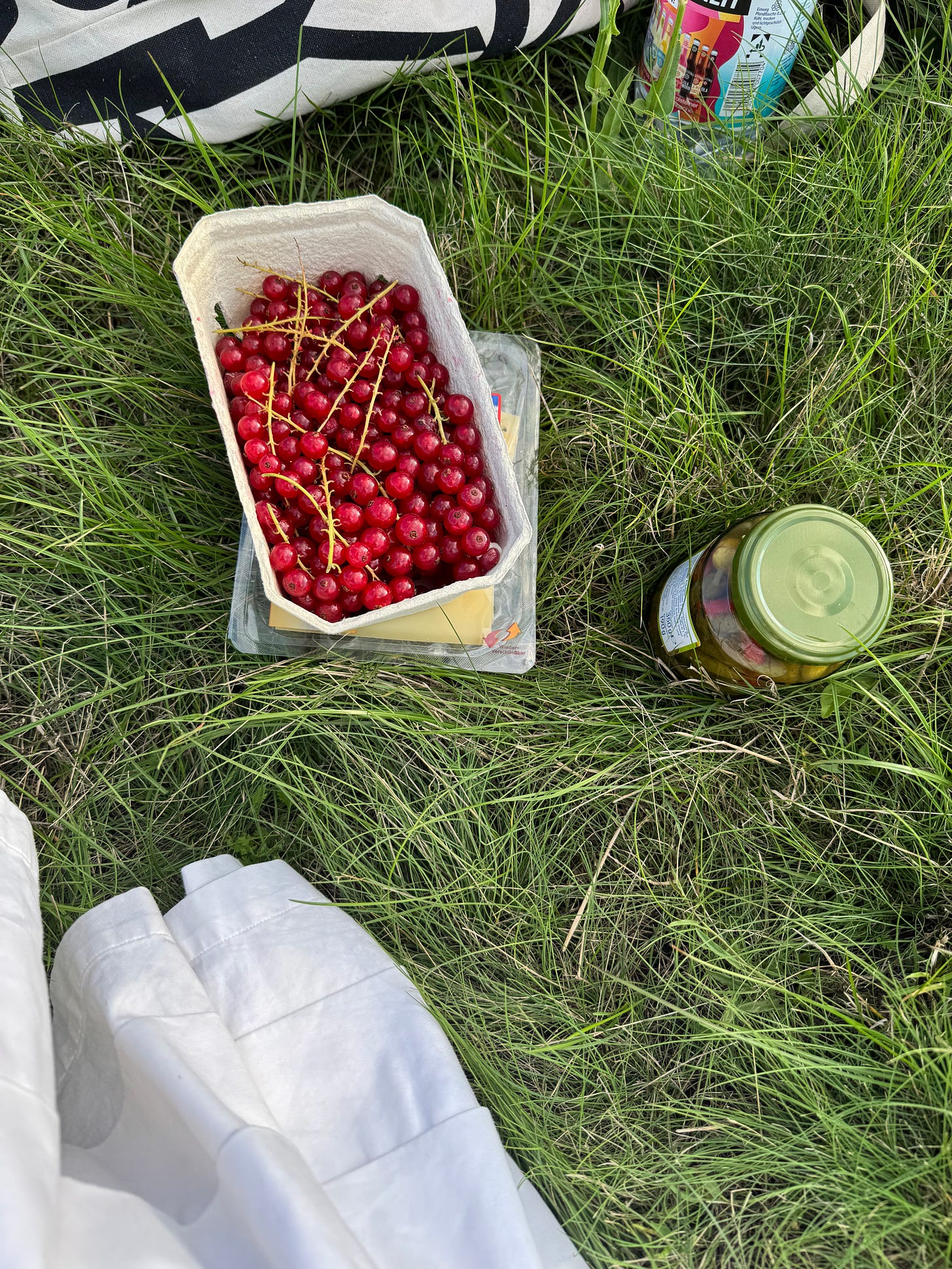
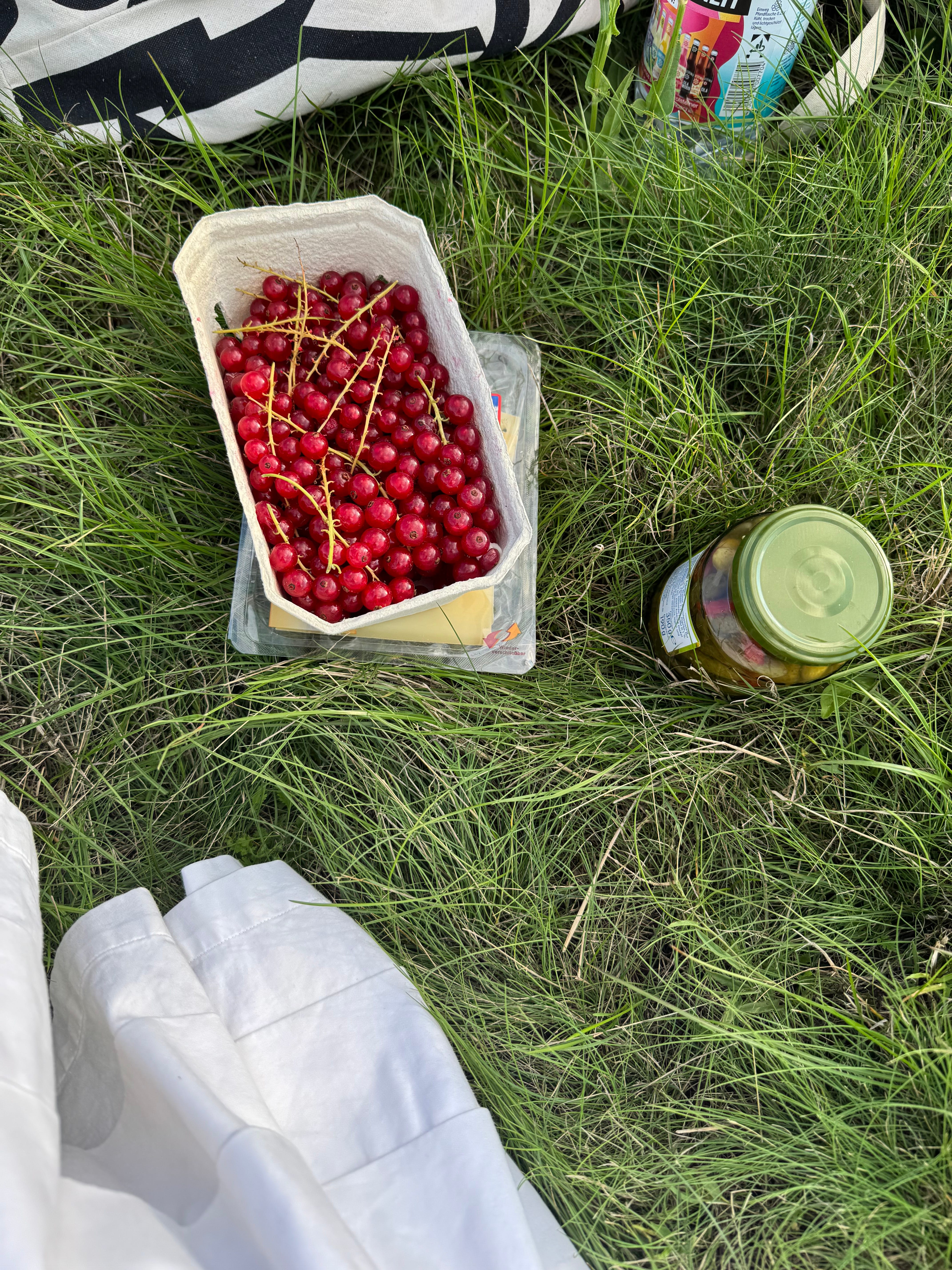
I ate what I thought were lingonberries but were really redcurrants at Tempelhofer Feld in Berlin, thanks to very much living poet Tracy Fuad of Portal for the rec. It’s an old airport (where the airlifts took place) and people rollerskate and stroll along the old runway, with endangered birds nesting in the false oat grass. The berries at sunset in my white summer dress made me think of Persephone and her pomegranate. Did she ever wish she could enjoy such tartness and stain her fingers without punishment from Hades? What if she and Demeter caught up on their mother-daughter love over redcurrants? What if the pleasure could be hers again in the story? For great adaptations of the Persephone myth I recommend Averno by Louise Gluck. Also of course The Pomegranate by Eavan Boland is well worth a visit. Two poets shockingly no longer on Earth.
I checked out an incredible bookstore called Hopscotch in Berlin as well and read a copy of Mahmoud Darwish’s In the Presence of Absence, a hybrid prose-verse self-elegy at the end of his life, and a stunning meditation on freedom, home, place, and exile.
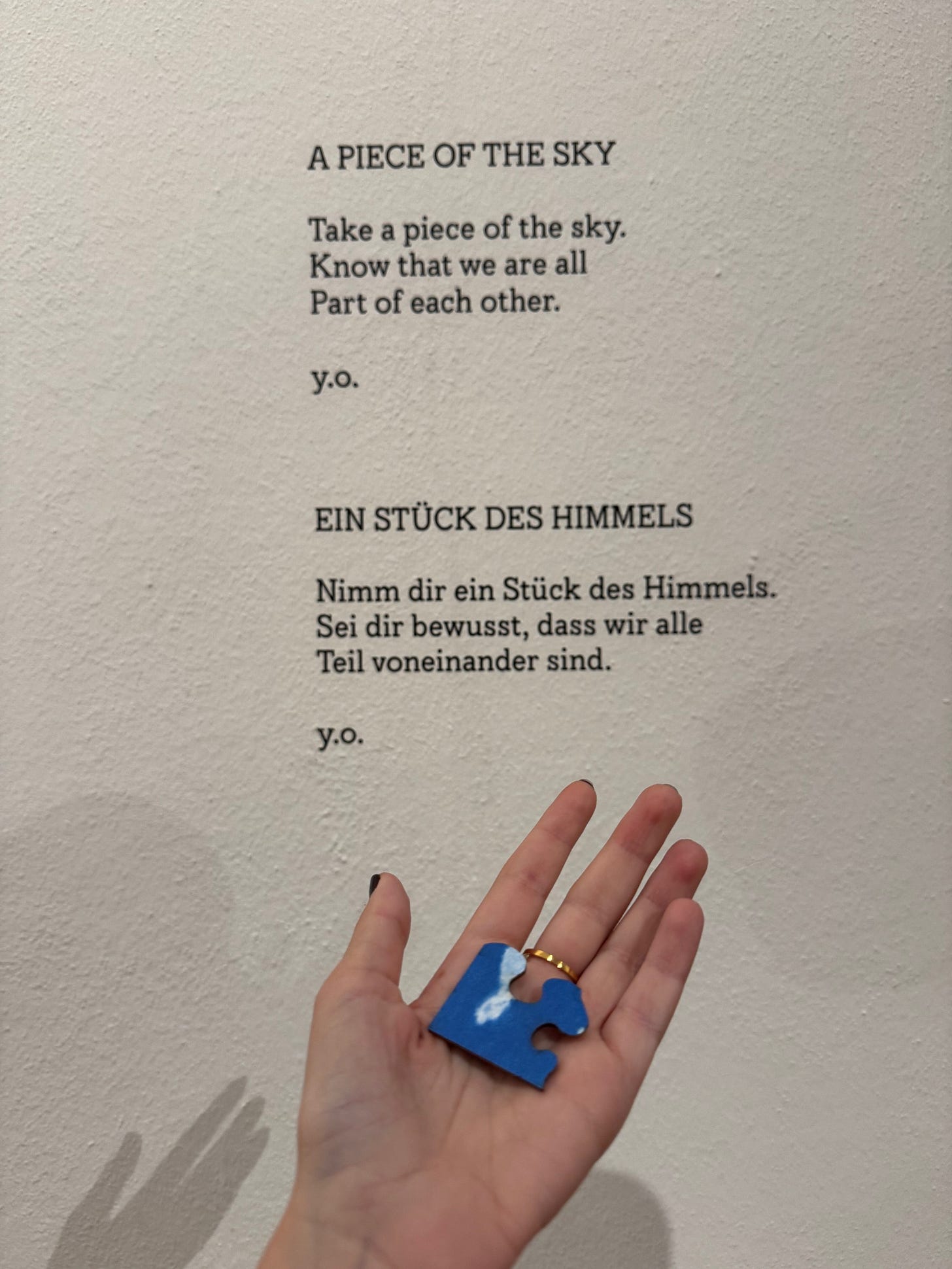
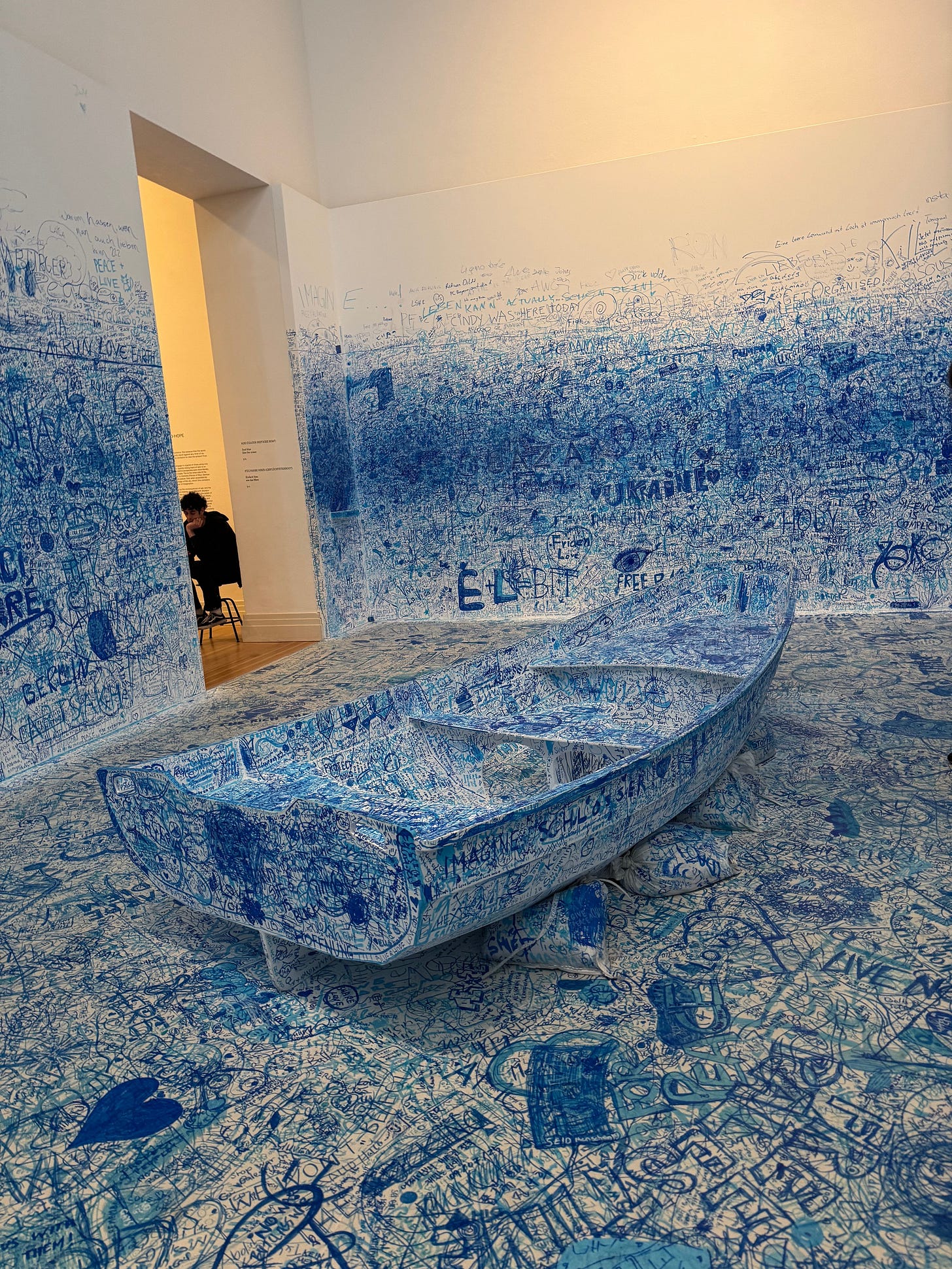
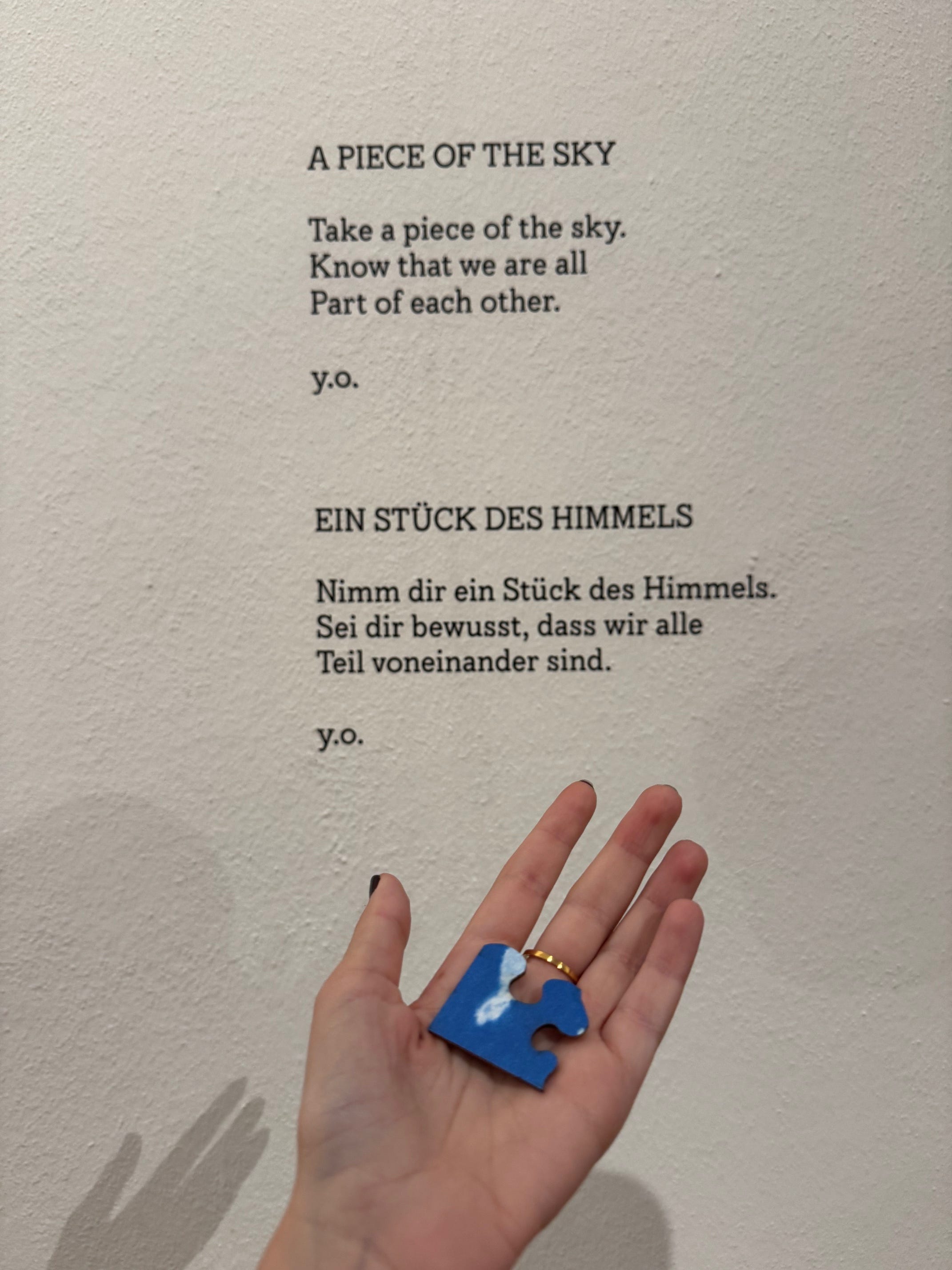
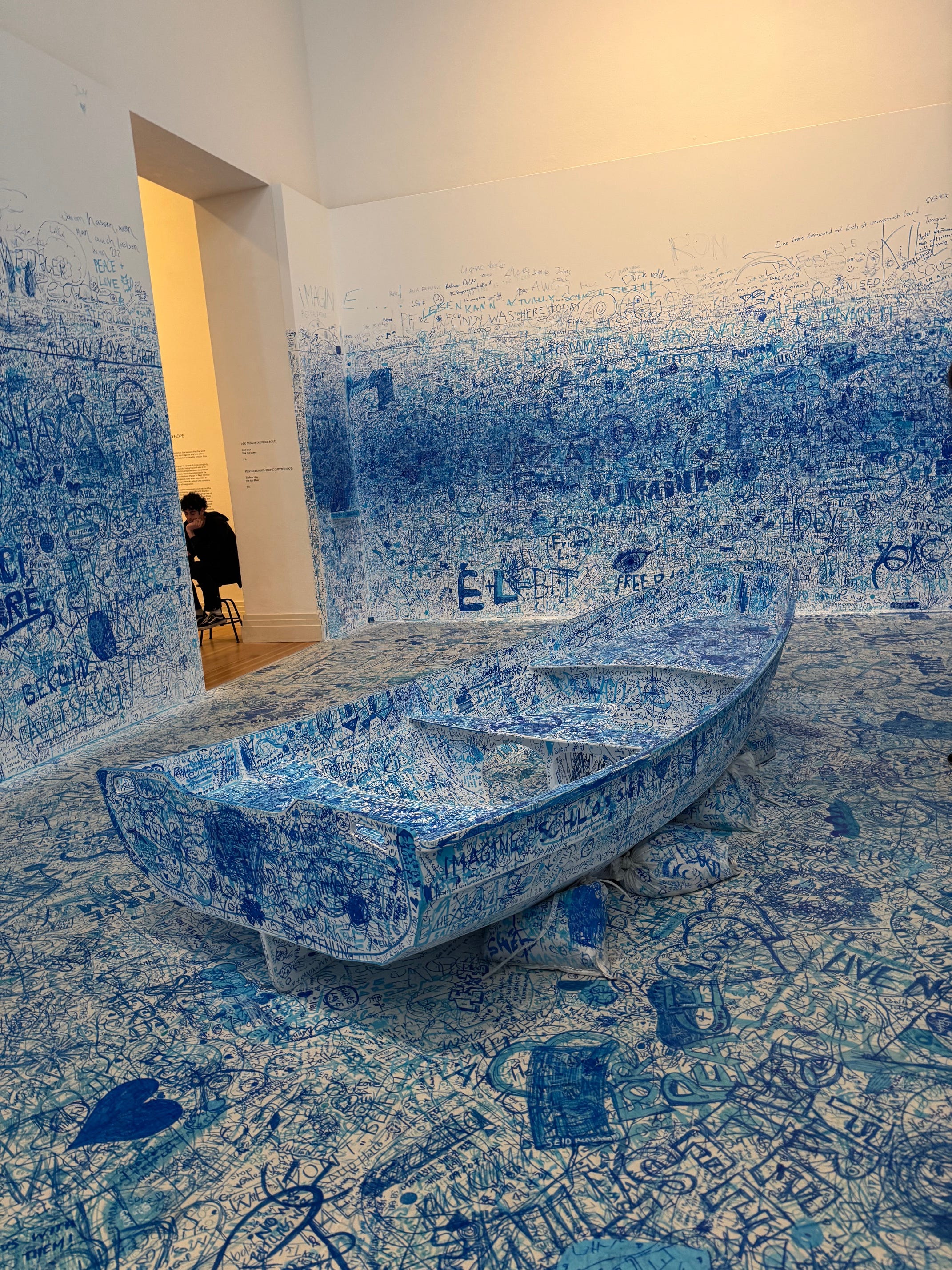
More poetry in Berlin: I saw two interactive Yoko Ono exhibits, one at the Neu Galerie and one at Gropius Bau. Her instruction poems from the collection Grapefruit are a highlight. I enjoyed getting this puzzle piece of sky and meditating on peace, which the world desperately needs more of right now.
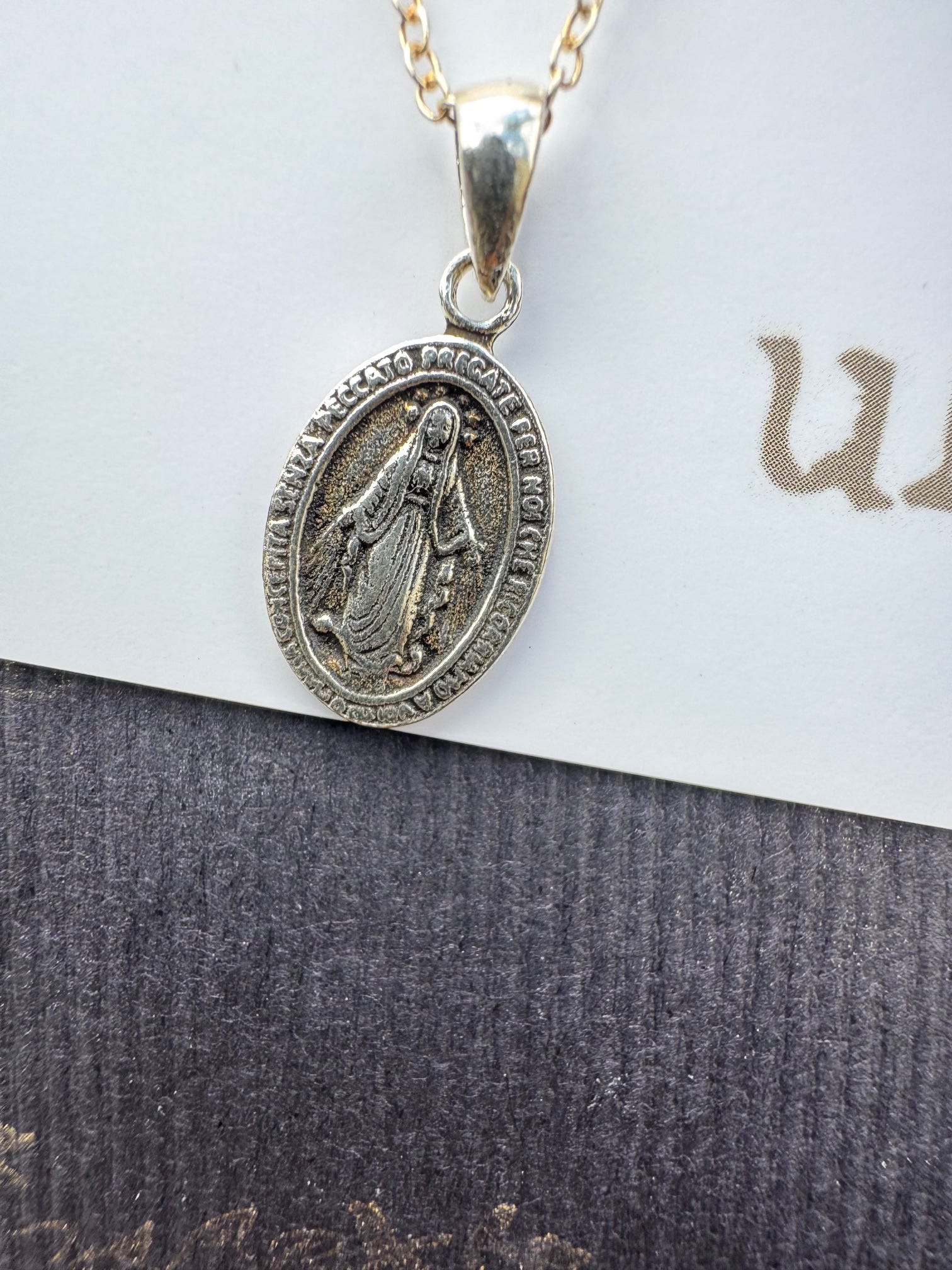
Every day I was in Berlin I passed a store outside of which was displayed a single golden dress. It was the only one left. Finally, I tried it on in front of an open window onto a courtyard, as quickly as I could possibly undress and dress. Unfortunately, it didn’t fit well, but right behind it was an infinity ring that fit my middle finger (a lemniscate! iykyk) for a few euros and a little medallion calling to me behind it. I bought the medal and learned with a little research that it was the “miraculous medal” which apparently depicts the intercession of Mary, in the light crushing a snake, arms out to the sides, with these words: . I wore it daily since then, not sure exactly why, though reading into some apocrypha on her own birth and childbirth, I have been fascinated how the language travels through the erotic and physiological processes that her virgin birth overrides (the scarlet thread she weaves on her twelfth birthday when she marries Joseph, her labor pains which make her both smile and grimace, the midwife’s perception of the cave effaced with light when Jesus is born, and most creepily Salome confirming she is still a virgin by checking her hymen with her own fingers).
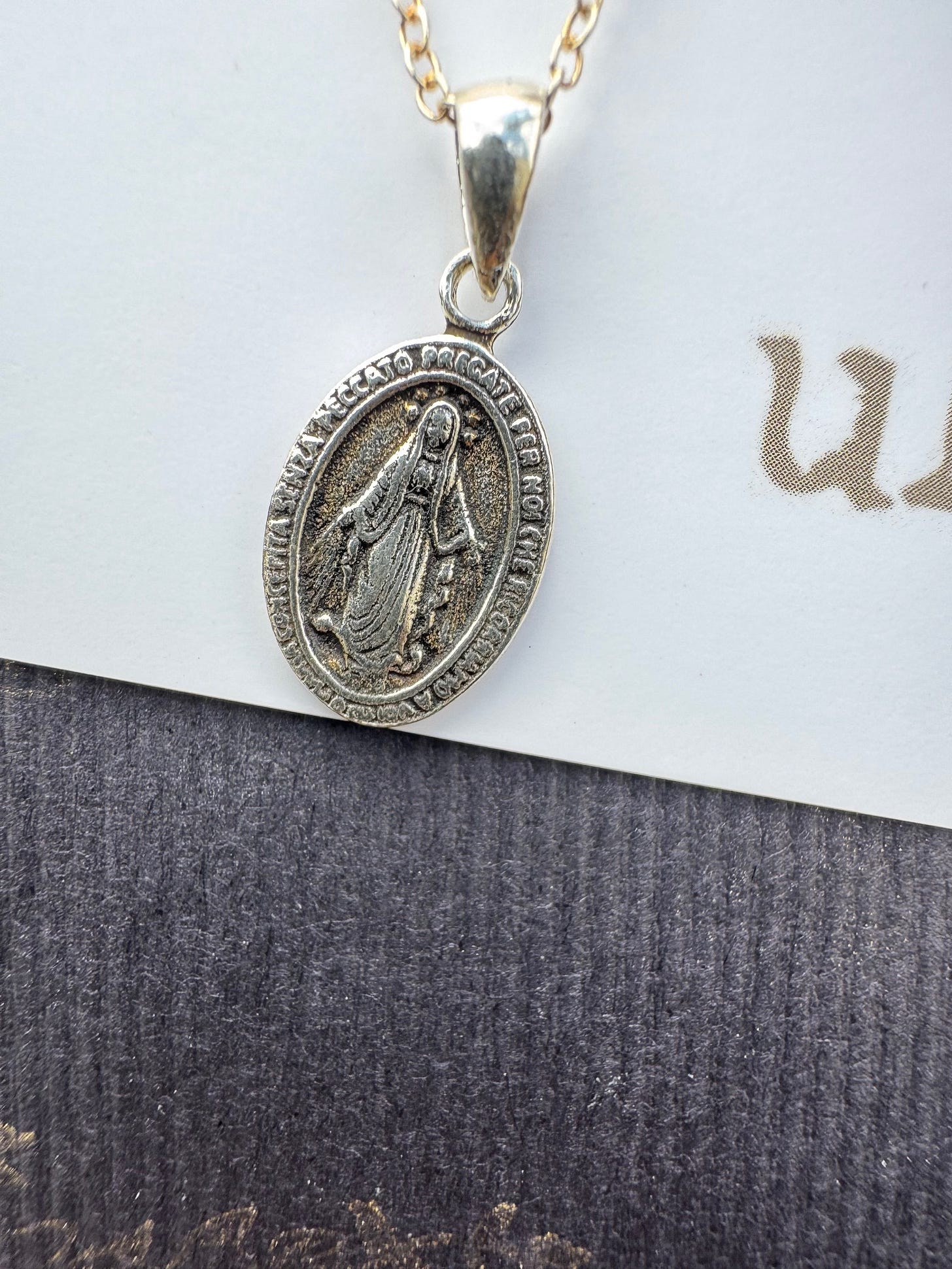
I’m not Catholic or even religious, but on the Assumption I went to Mass to learn more about the death of Mary…apparently she herself was conceived without sin and she dies without pain, mortal but resurrected before all other mortals. The next day my necklace unclasped and I searched on my hands and knees for the medallion. Finally I put it back on and within an hour it broke on the street and the clasp no longer worked. I don’t know what this means but I think there is a calendar of Mary I will live along the rest of my life, her conception, annunciation, birth, mourning her son, her own assumption. Unlike Christ’s rebirth, her milestones are the mortal ones, but each one is just one degree more special. It feels comforting to track somehow. I replaced her medallion with my pagan snake (I know, I know) and have been thinking about the phrase “fruit of the womb” and the Magnificat. What if Eve’s apple is the precursor of that fruit? Is temptation, appetite, sexual desire that far from the desire to have a baby, to carry god inside? They have always been close for me.
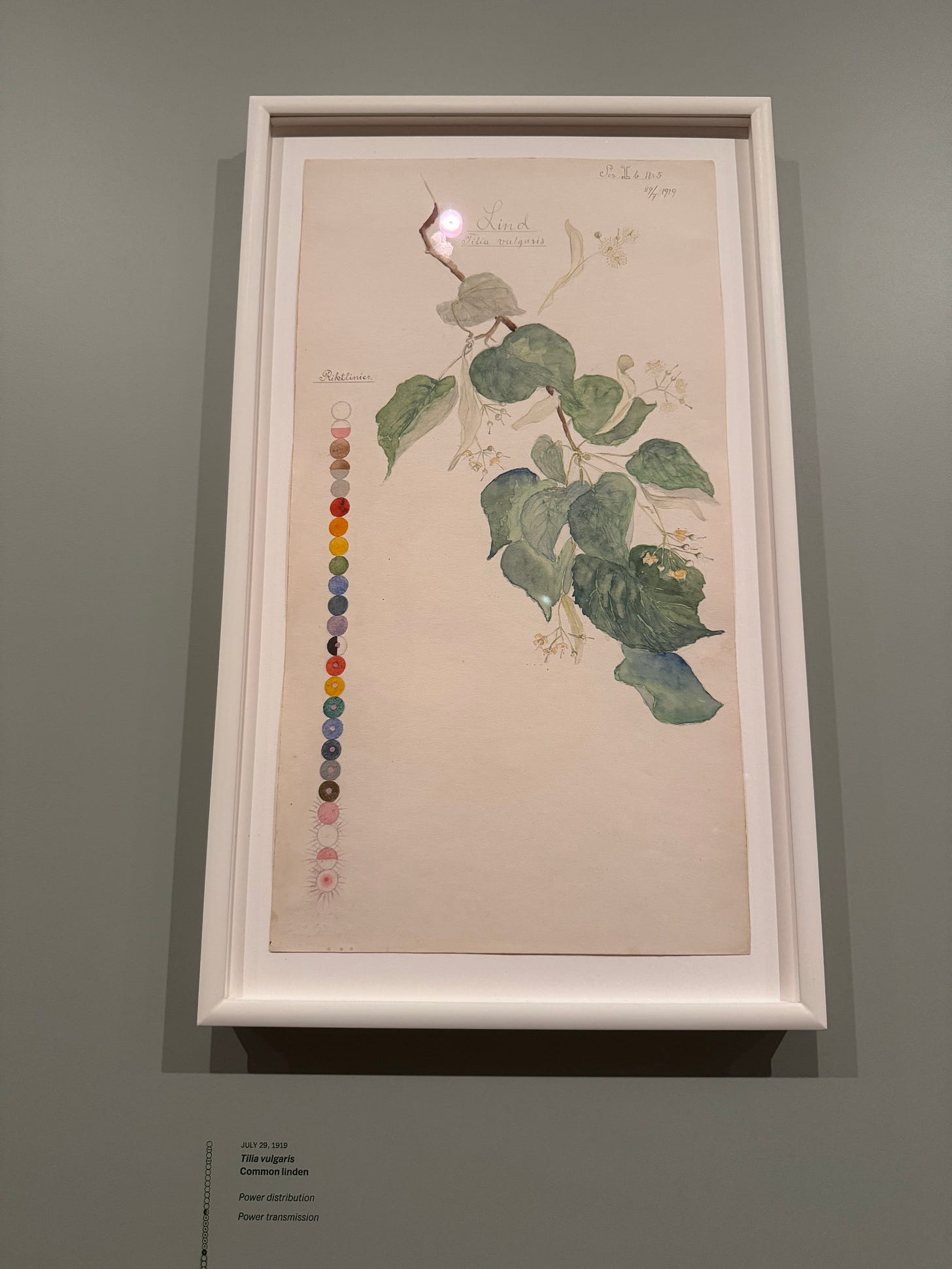
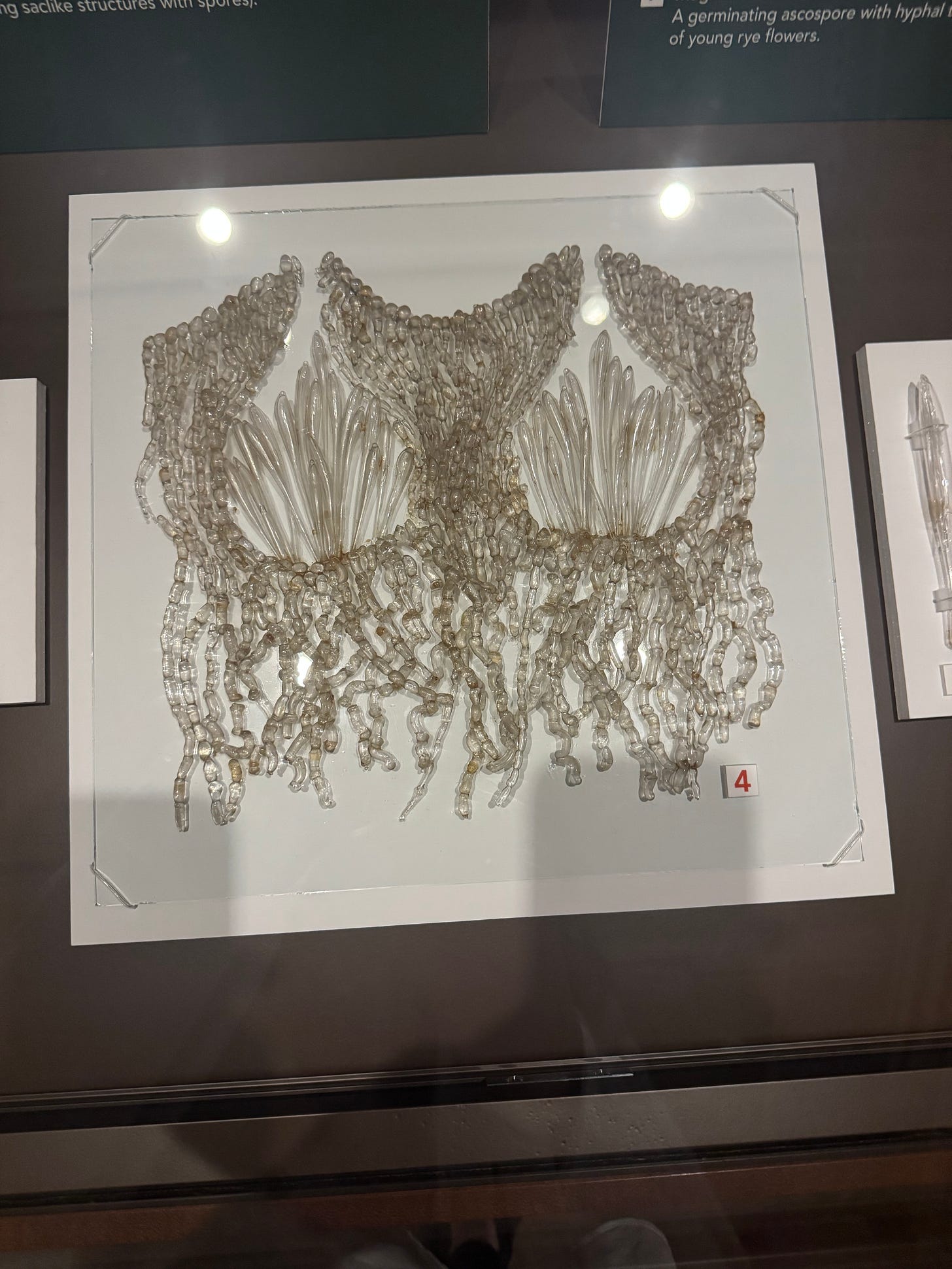
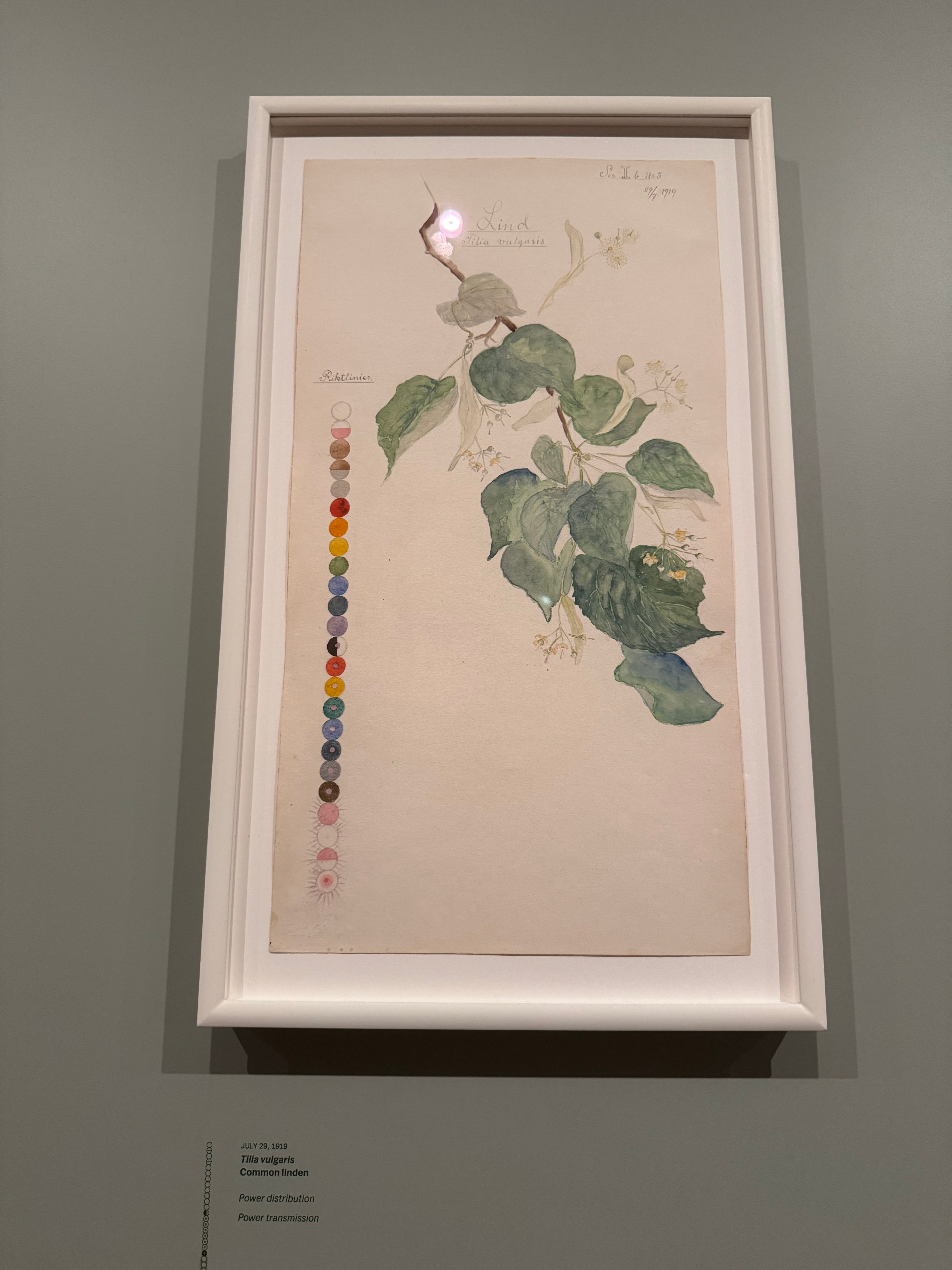
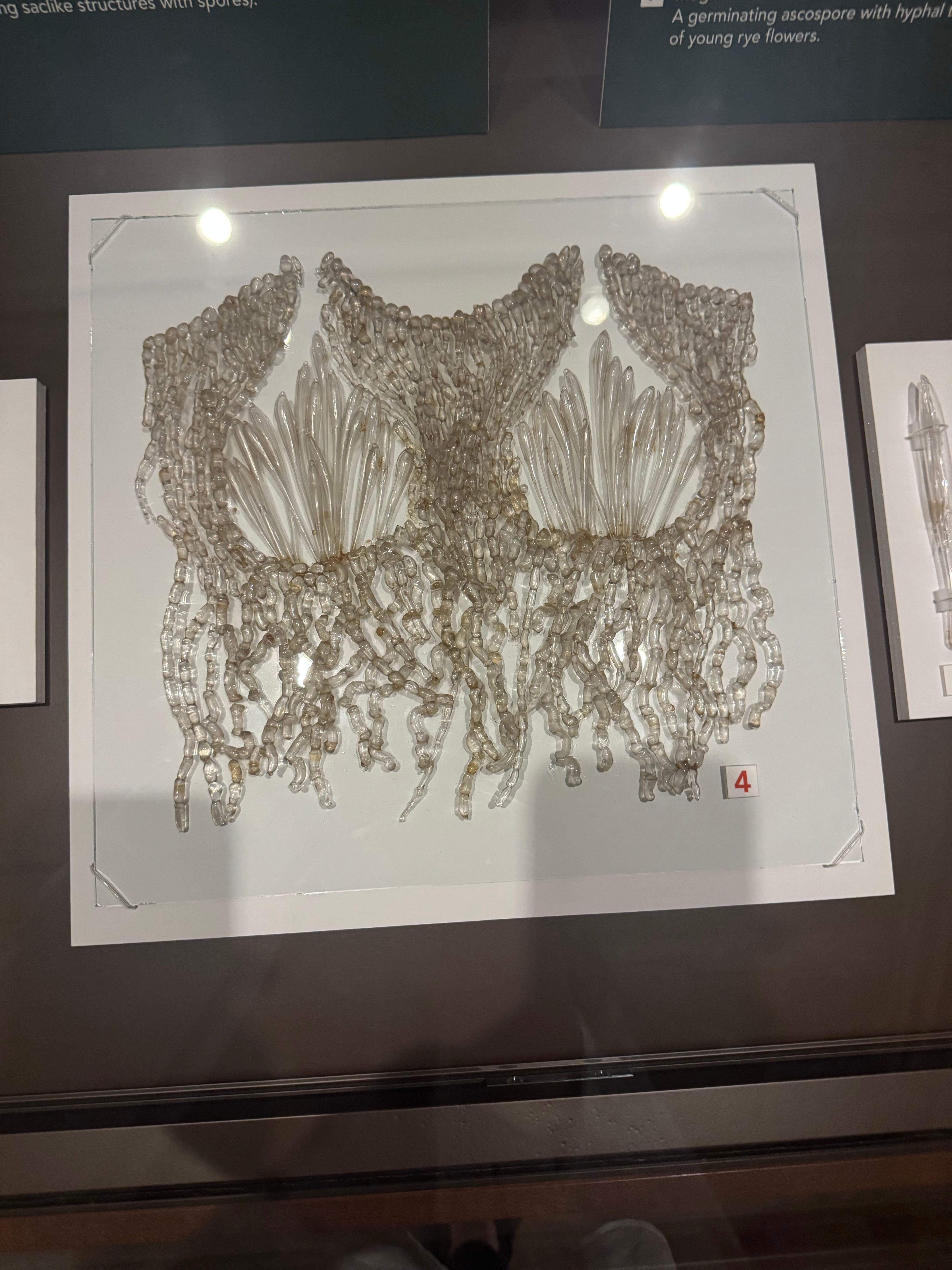
Highly recommend flowers in summer. Check out the mystical diagrams, with magnifying glasses provided, at MOMA for the Hilma af Klint What Stands Behind the Flowers show, which I saw with Dorothea Lasky and Nicole Treska and need to go back to asap. Note the caption she writes: POWER DISTRIBUTION POWER TRANSMISSION. How can we all take our own vision more seriously? Isn’t that what it means to believe? Also these Ware glass flowers Dottie told me about at the Harvard Museum of Natural History. I drew Dottie’s “Still Life” Creativity Card. There were also amazing sea creatures in glass by the same father-son Czesch glass blowers. I learned that dandelions and sunflowers are composite flowers. One flower made up of many. My favorite is the cell structure which look like lace made in glass.
I saw Naruse Mikio’s The Stranger Within the Woman, a living woman/wife is haunted and burdened by the desire of a dead woman via her husband’s guilt and actions. I began to think about how the dead woman’s desire was a metaphor for the living woman’s dead desire. How often are we haunted by the needs of those who can no longer ask for what they need? How often do we carry others’ burdens as our own and burden others with sources that remain unknown to us? Do transgressions/crimes that weigh us with guilt operate like poems, creating a form and container to hold the otherwise unbounded, untethered monsters of our human nature? We think we can clear ourselves by confessing what wrongs we have done, but maybe those wrongs are done because we already we feel we need something to confess to. Maybe morality is just too neat. I choose mortality.
When in need of AC I visited Widener Library and read a bit of the first edition to Ariel by Sylvia Plath. Widener is where Plath meets her boyfriend-turn-assaulter who shows up in The Bell Jar. By the way, yesterday was Ted Hughes’s birthday. Here’s a quote from Janet Malcolm’s The Silent Woman (on Plath’s publication history) which is a real page-turner, sort of related to exile: “it is awful to want to go away and to want to go nowhere.” I’ve been feeling like I’m out of exile, back from LA, yet my urge is to prove I’m both home and free, by taking trains and even planes in the other direction or all over New England! I learned recently of the Salve Regina prayer “After this, our exile” as if life on earth is the exile. As exiles, home exists in the imagination. Once we are allowed to go home we are no longer an exile, but that doesn’t mean we belong. I think Darwish helped me think about these identities more politically but in some sense every individual reckons with this question of longing and belonging in a lifetime.
Also from Malcolm, there’s a great bit about unsent letters and how not sending a letter but keeping it is its own gesture of belief, its own genre of literature. I began to wonder, as I’m teaching a course this Fall at Columbia, Both Sides of the Envelope: Letter-Poems and Poem-Letters: what is more different than an unsent letter (kept by sender, never reaches recipient), a prayer (sent by sender, omnipresent recipient), or a suicide note (emphasis on being read, only read once sender is dead). It makes me think of all the ways an I reaches toward a you, invents the you and transforms the I etc.
Thinking a lot about the edges of the mind, where madness and mysticism meet. Mysticism, Simon Critchley defines (I think referencing Evelyn Underhill) as an experience taken to its extreme. And madness has something to do with a self losing sense of her reality. Are both of these forms of transgression that poetry approaches or that reflect what poetry can do not only by taking language to its extremes or inevitable failures, or form (the line break etc.) but the edges of sense itself. I just reread Three Poems (mystical/madness border in a way) by John Ashbery and the controversial The Dolphin by Lowell (picked up at The Grolier!) which uses Hardwick’s letters to make a half fiction, exploring his time hospitalized for mania etc (also fascinating to read about Lowell and others in the work of Kay Redfield Jamison who writes about “manic-depressive”/bipolar illness and suicide). I also appreciated learning more about James Schuyler in Dan Chiasson’s latest New Yorker piece.
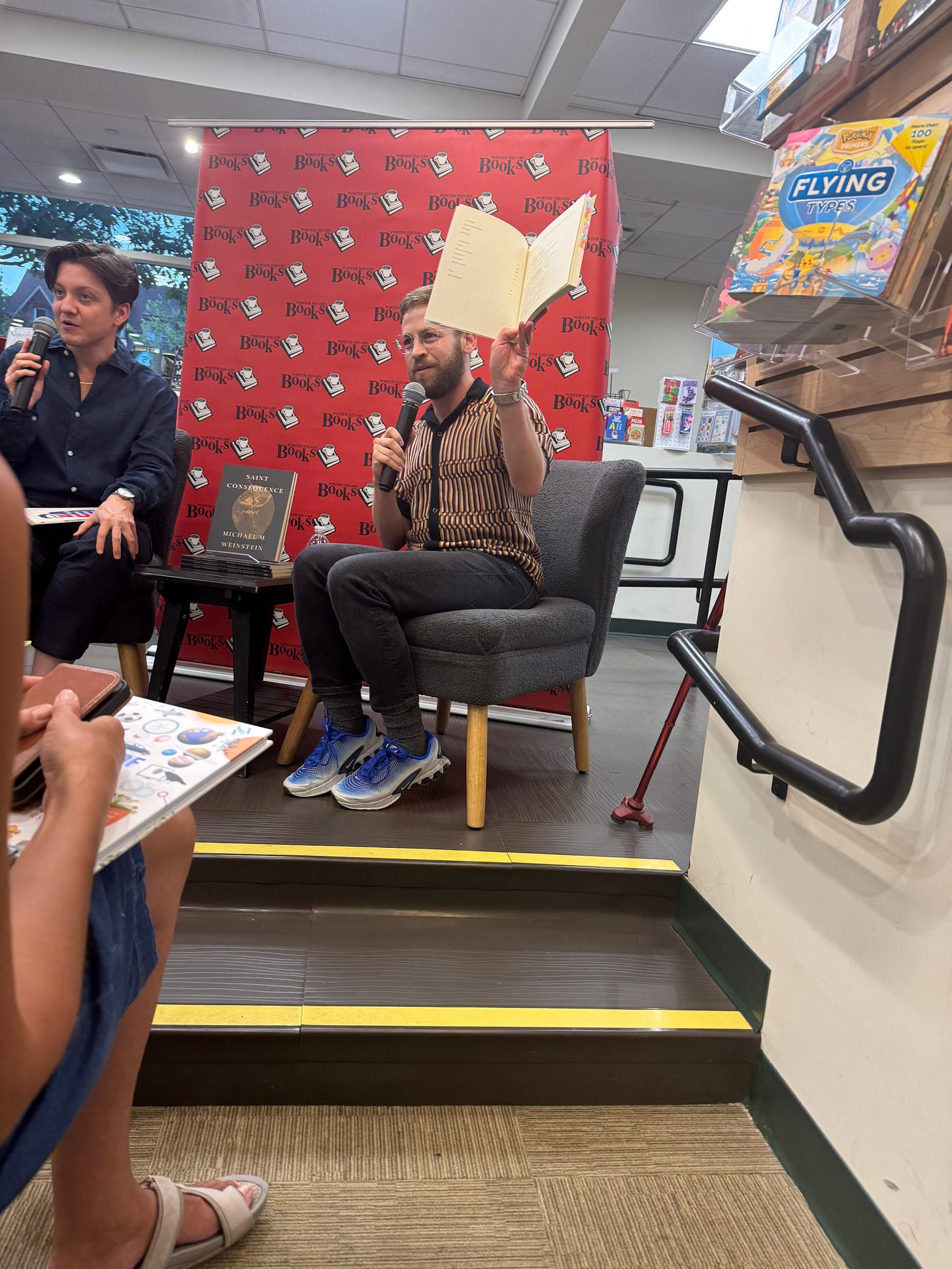
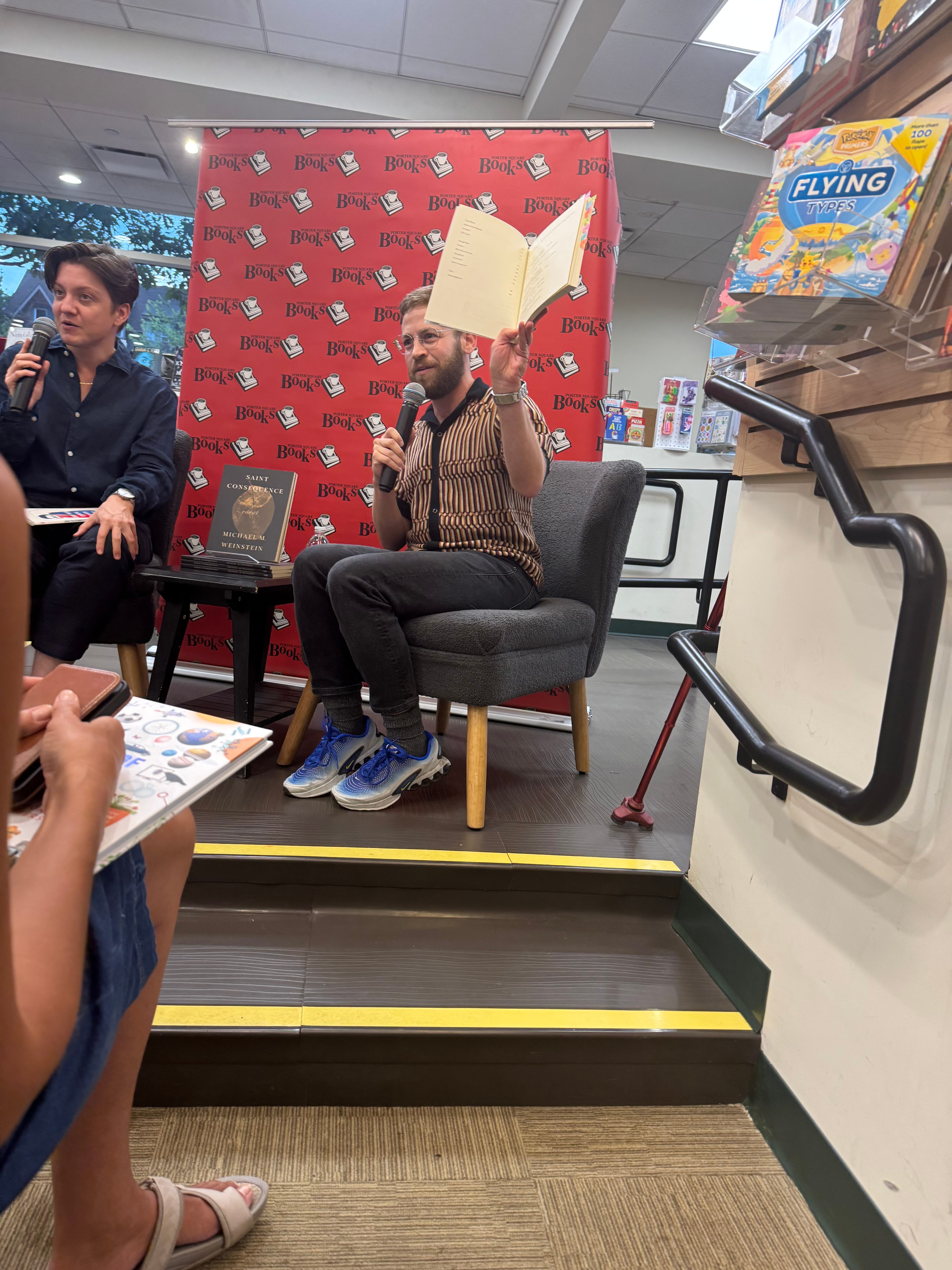
Speaking of the spiritual and times of transition, check out this incredible debut Saint Consequence by Michael Weinstein, reviewed by Amanda Hawkins at LA Review of Books. These lush and roving poems take us to Siberia, through choices and unchosen changes, disability and gender transition, sibling love and erotic desire. In it, we haunt ourselves. I had the pleasure of hearing Michael read and discuss the book with K Iver at Porter Square Books, and the night ended with K asking Michael what is Holy. Michael’s answer, community, gave me chills. The holy, which I think of as only felt in solitude, was all of us together. On that note, another favorite poet and person Katie Peterson will read at The Grolier in September!
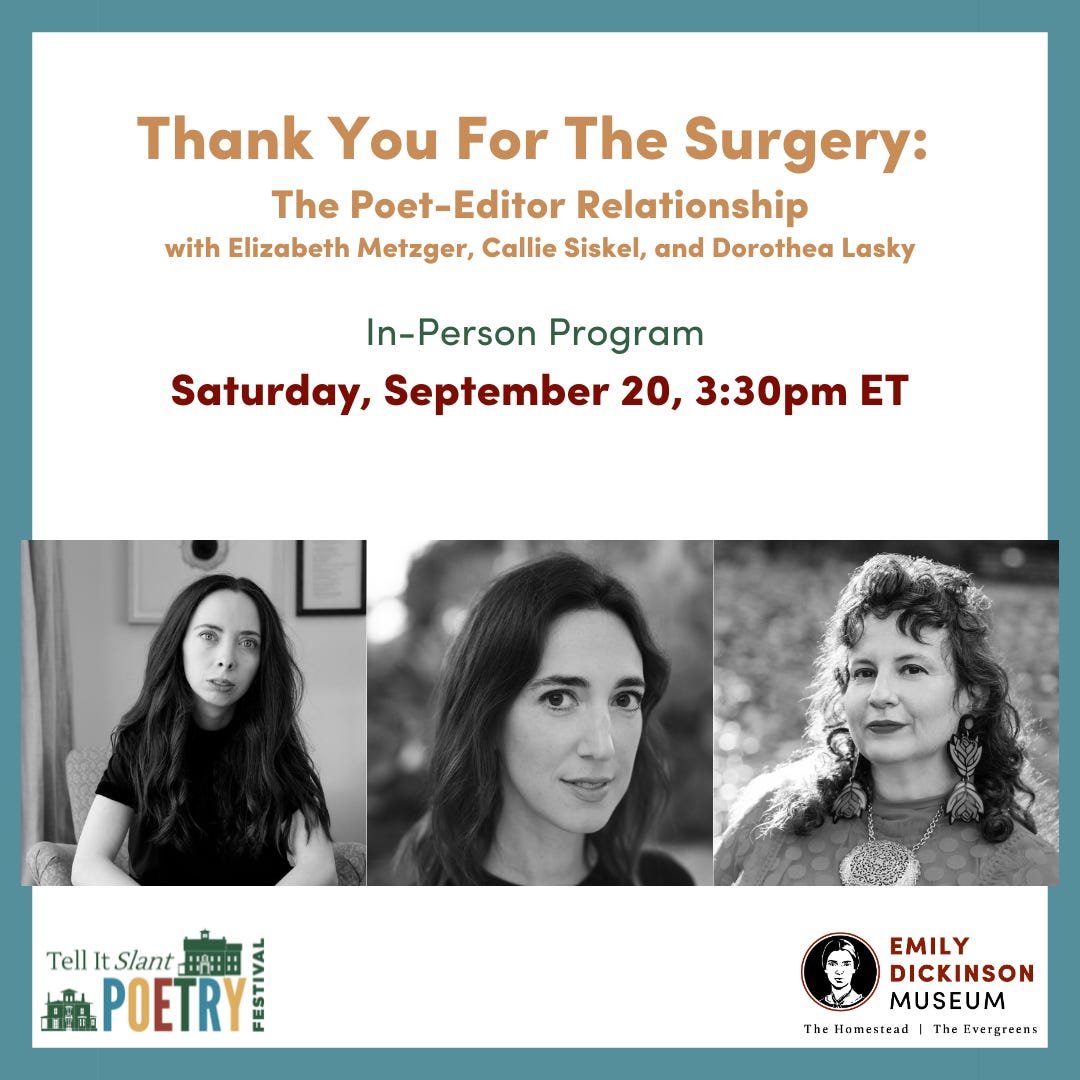
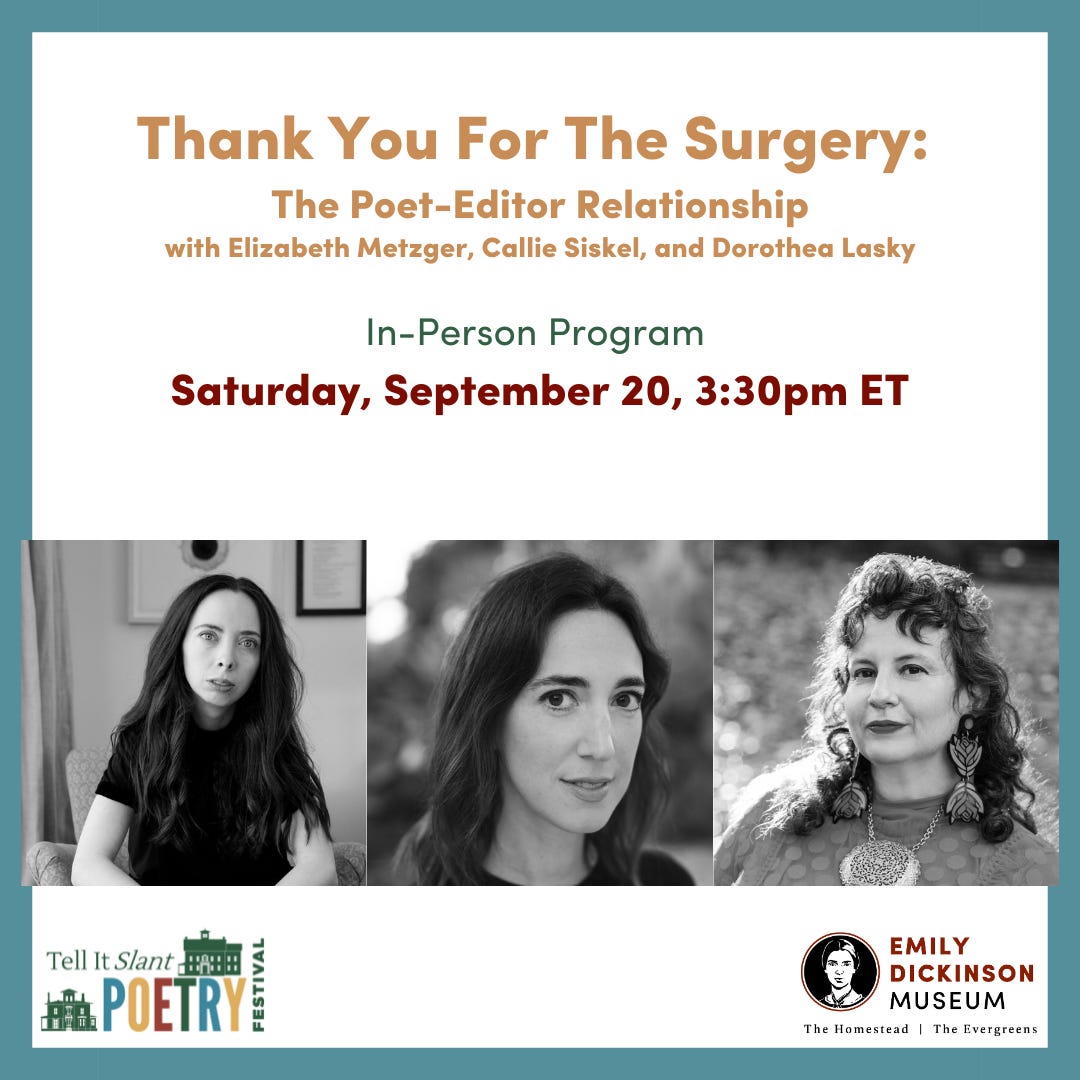
Coming up this September is the Tell It Slant Festival at the Emily Dickinson Museum in Amherst. I’ll be there to lead a panel with Dorothea Lasky and Callie Siskel called Thank You for The Surgery: The Poet-Editor Relationship. I’d love to see you there and say hi to the spirit of Emily with you! Register here.
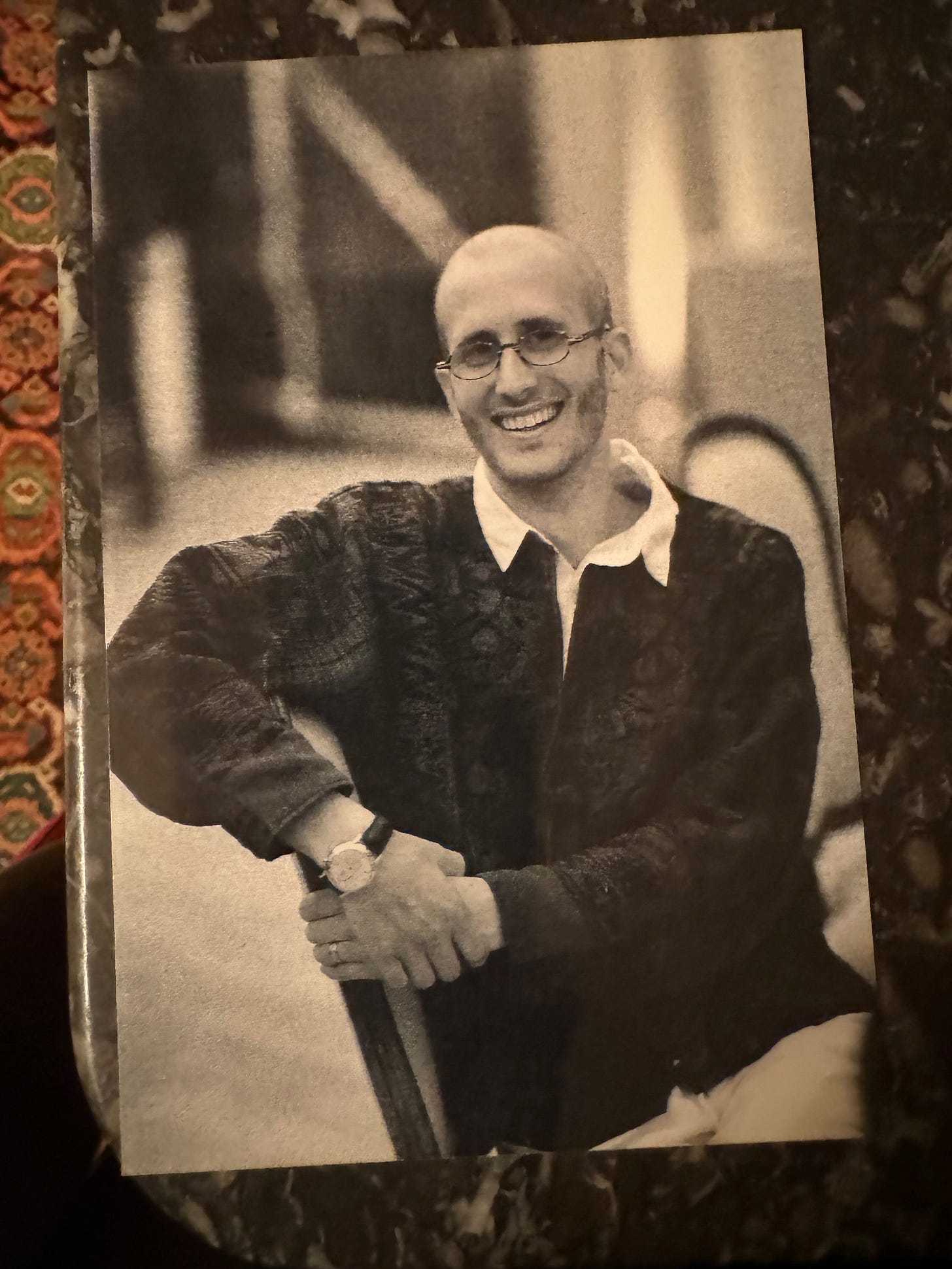
Speaking of my most intimate spirits, my daemon Max Ritvo died nine years ago this August 23rd, Saturday. Please send him a poem, letter, or prayer and feel free to share it with me or keep it unsent, or speak it in your head. If you have a minute, find one of his poems or a reading of one of his poems online or in Four Reincarnations or The Final Voicemails and read it or reread it or share it with a friend or stranger as a sort of letter back. Use social media or do a private ritual with a bird. I believe he is writing to you…In the meantime here is a knockout poem of Max’s in The New Yorker “Poem to My Litter” and a poem I wrote for Max from my forthcoming collection The Going Is Forever (Milkweed, Fall 2026) called “Moving Out”.
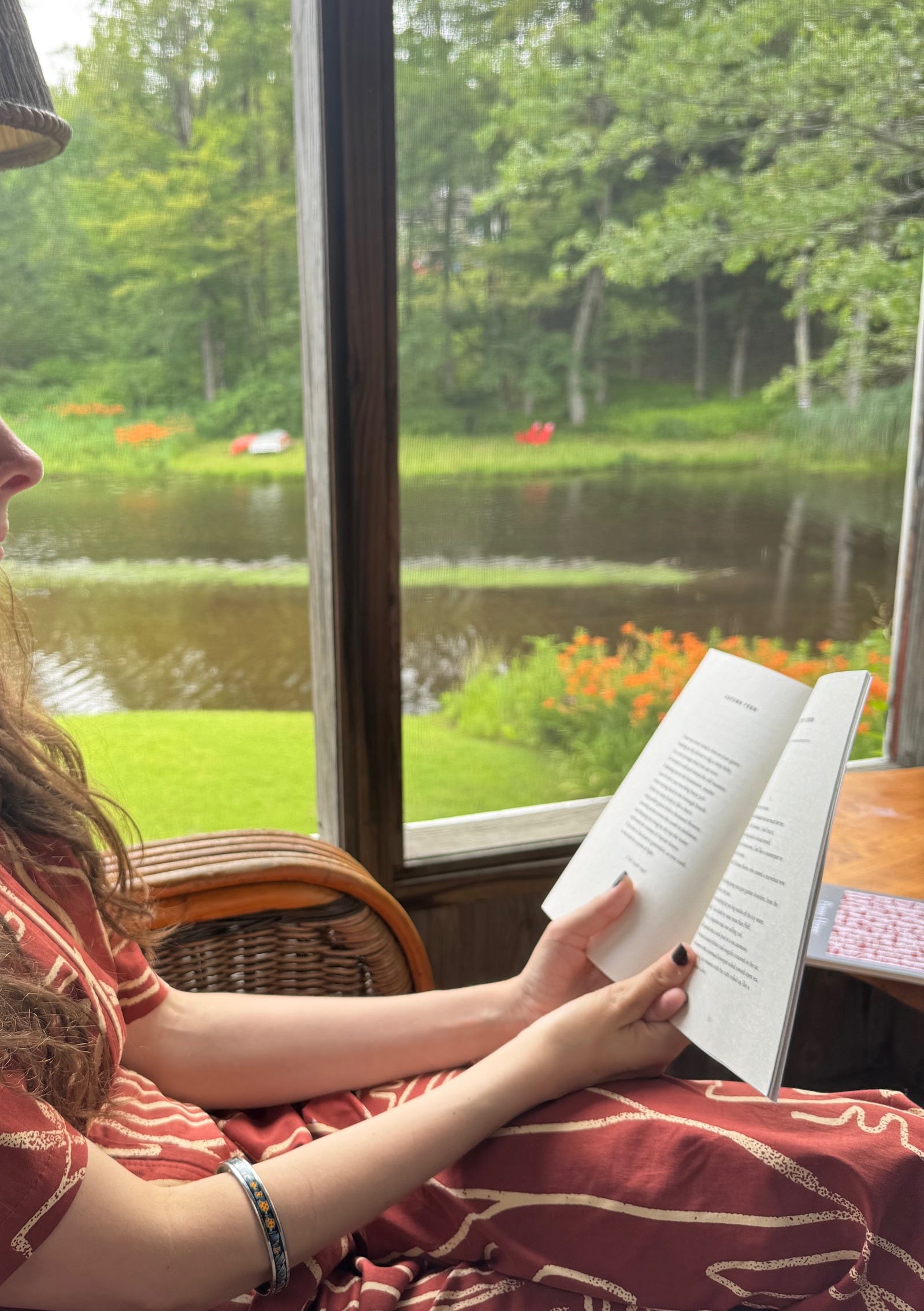
I’m off to reread Ariel, one poem per night. Tonight is “Lady Lazarus”! It’s nice to read poetry in different ways. Aloud, silently, outside, inside, quickly, slowly, over and over, backwards and forwards, with your eyes closed, with your pen in hand, etc. How do you like to read poetry? Any rituals or surprising experiences reading a poem this summer?
Wishing you all late summer visits—I’d love to hear about them or anything else in the comments, and please share this newsletter with your living poets and poetry intimates, or contact me via whatever medium :)
In spirit,
Elizabeth
#11...see the Hilma af Klint documentary, "Beyond the Visible," if you can - an incredible pairing with the MOMA exhibit.
#13...on exile and home, you reminded me of Stephen Jenkinson's take on the story of Genesis from "Die Wise":
"Losing home and then stumbling out into the world is this culture’s foundation story. …Prior to that exile [from the Garden of Eden], life was eternal; after the banishment, humans are frail and murderous – and mortal. …The loss of home, the story says, is the beginning of death. That is how human death comes into human life, in humans being driven from home. …So this belief that the dead are essentially not the business of the living has a long history. The abandonment of the dead is a reaction to the calamitous loss of home. …The belief in a single omnipotent deity seems to have translated for most believers into an unspoken certainty that the deity’s relationship with the dead eclipses and obviates the living’s relationship with the dead.” xoxo